17+ Years of Personalized Eye, Nose & Lifting Plastic Surgery in Gangnam, Seoul

Medical Guide
Double Eyelid Surgery Recovery Time: What to Expect
A realistic look at double eyelid surgery recovery time, from early swelling and suture removal to the weeks and months of settling, reviewed by a surgeon.
Schedule a ConsultationDouble Eyelid Surgery Recovery Time: What to Expect
Medically reviewed by Dr. Kiweon Ham, Board-Certified Plastic Surgeon in South Korea, Chief Director, Gonggan Plastic Surgery
One of the first questions people ask about double eyelid surgery is not about technique or shape. It is simply: how long until I look and feel like myself again? That is a practical, understandable concern, especially if you are planning around work, travel, or an important event. The honest answer is that recovery unfolds in stages, and while there are general timelines most patients can expect, the exact pace varies from person to person.
Double eyelid surgery, a form of blepharoplasty that creates or refines a crease in the upper eyelid, is one of the more common eyelid procedures. This article walks through what recovery typically looks like, from the first swollen days to the months of gradual settling, and highlights when to reach out to your care team. Think of it as a general roadmap rather than a fixed schedule, because your own healing and the specific technique used will shape your experience.
Two Main Techniques, Two Recovery Patterns
Recovery depends partly on how the crease is created. There are two broad approaches, and understanding the difference helps set realistic expectations.
The incisional method involves a small cut along the eyelid to form the crease and, in some cases, to adjust skin or fat. Because it involves an incision and sutures, it generally comes with a somewhat longer and more visible early recovery, including a period before the stitches are removed.
The non-incisional (buried suture) method creates the crease with sutures placed through tiny openings rather than a continuous incision. This approach often has a faster early recovery with less initial swelling and bruising for many patients, though it may not suit every eyelid anatomy and results can be less durable over time.
Which technique fits you depends on your eyelid structure, skin, and goals, and that is decided together with your surgeon. You can read more about the eyelid procedures offered at Gonggan Plastic Surgery and discuss which approach may be appropriate for you.
The First Few Days
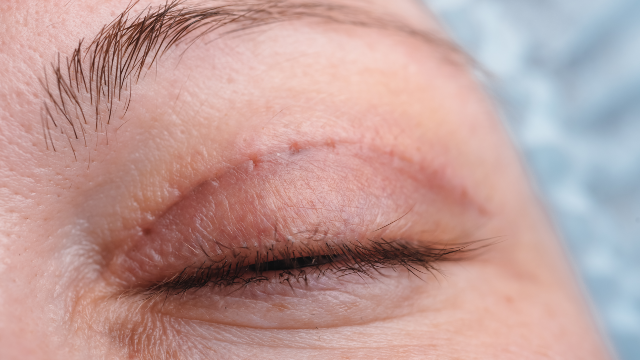
The early recovery period is when swelling and bruising are at their most noticeable. In the first several days after surgery, it is normal to have puffy, swollen eyelids, some bruising, mild discomfort, and a tight or "aware" sensation around the eyes. Many patients also notice temporary watering, dryness, or sensitivity to light.
Cold compresses are commonly recommended in the early days to help manage swelling, and keeping the head elevated, including while sleeping, can make a meaningful difference. Discomfort during this stage is usually described as mild and manageable rather than severe, and your surgical team will provide specific after-care instructions. This is the phase where rest genuinely matters, so plan for a quiet few days without strenuous activity.
The First Two Weeks and Suture Removal
For the incisional method, sutures are typically removed within roughly the first week, at a time your surgeon determines. Suture removal is a simple in-office step, and many patients feel that they turn a corner afterward, even though swelling is still present.
By around one to two weeks, the most dramatic swelling and bruising have usually begun to fade, and many people feel more comfortable being seen in public, even if the eyelids still look a little full or the crease sits higher and tighter than it eventually will. Makeup, contact lenses, and certain activities are usually reintroduced only when your surgeon says it is safe, so follow their guidance rather than a general rule you read online. For the non-incisional method, this early phase is often shorter and less swollen, but the same principle applies: let your care team set the pace.
Weeks to Months: The Settling Phase
Here is the part that surprises many patients: the eyelids continue to refine for far longer than the first couple of weeks. While you may look presentable within one to two weeks, the crease and surrounding tissue keep settling over the following weeks and months. Residual swelling can linger subtly, and the crease often looks higher, tighter, or slightly uneven early on before softening into its final position.
It is common for the truly final, natural-looking result to take several months to emerge as the last of the swelling resolves and any scar (in the incisional method) matures and fades. During this time, minor asymmetry between the two eyes is normal and usually evens out. Patience is an important part of the process, and comparing your day-two or week-two appearance to a final result is not a fair comparison. If you would like a professional to assess your candidacy and talk through timelines for your case, Dr. Kiweon Ham's surgeon profile describes his background in eyelid surgery.
Results Vary, and So Does Recovery
No two recoveries are identical. Age, skin thickness, the specific technique, whether additional work such as ptosis correction is combined, and individual healing all influence how quickly swelling fades and how the final crease looks. Some people bruise more than others; some settle faster. This is why the timelines above are general ranges rather than promises, and why a personal consultation is the only way to get expectations tailored to you.
It is also worth remembering that eyelid surgery, like any surgery, carries realistic risks, including swelling, bruising, temporary dry eyes, asymmetry, and the possibility that the result does not fully match your goals. A thorough consultation should cover these openly.
When to Seek Care
Most of what you experience during recovery, swelling, bruising, mild discomfort, and temporary dryness, is expected and improves with time. However, you should contact your surgical team promptly if you notice signs that fall outside normal healing, such as worsening or severe pain, spreading redness, warmth, discharge or other signs of infection, significant bleeding, sudden changes in vision, or trouble closing the eyes. When in doubt, it is always reasonable to call your clinic and ask. You can reach the team through the clinic's contact page.
Frequently Asked Questions
How soon can I go back to work?
Many people return to non-strenuous work within one to two weeks, once the most visible swelling and bruising have eased, though this varies with the technique and how quickly you heal. The non-incisional method often allows a quicker early return for some patients. Your surgeon's clearance should guide the decision, not a fixed number of days.
When are the stitches removed?
For the incisional method, sutures are usually removed within about the first week at a time your surgeon determines. The non-incisional method does not involve the same continuous incision, so the experience differs. Your surgical team will tell you exactly when to come in.
How long until the final result?
While you may look presentable within one to two weeks, the crease and surrounding tissue continue to settle over weeks to months. The final, natural result often takes several months as the last swelling resolves and, for incisional surgery, any scar matures.
Is there a lot of pain?
Most patients describe mild, manageable discomfort rather than severe pain, along with tightness and swelling in the early days. Your surgical team will provide after-care instructions to keep you comfortable. Report any worsening or severe pain to your clinic.
Why does the crease look too high or uneven at first?
Early swelling lifts and tightens the eyelids, so the crease often appears higher and less symmetrical than it eventually will. This usually softens and evens out as swelling resolves over the following weeks and months. Persistent concerns should be discussed at a follow-up visit.
Does the non-incisional method recover faster?
For many patients it does have a faster, less bruised early recovery because there is no continuous incision. However, it may not suit every eyelid, and results can be less durable than the incisional method. Suitability is determined at your consultation.
The Bottom Line
Recovery happens in stages: noticeable swelling and bruising in the first few days, meaningful improvement by one to two weeks, and gradual settling over months.
For the incisional method, sutures are typically removed within about the first week; the non-incisional method often has a faster early recovery.
The final, natural-looking result can take several months as swelling fully resolves, so early appearance is not the final outcome.
Results and recovery timelines vary with technique, anatomy, and individual healing, so treat all timelines as general ranges.
Contact your surgical team promptly for signs of infection, significant bleeding, vision changes, or severe pain.
This article is for general education only. It is not a substitute for a personal evaluation, and it is not a self-diagnosis tool. Surgical results and recovery timelines vary from person to person, and nothing here should be taken as a promise of a particular outcome or as medical advice. Always consult a qualified surgeon about your specific situation before making any decision about surgery.
More Articles
Continue reading our clinical guides.

Guide to Nose Surgery: Procedure Basics Explained
Guide to nose surgery: Discover procedure basics, preparation, recovery, and expected results. Learn what to expect and explore your options today.
Learn More

What to Know Before Eye Surgery
What to know before eye surgery: Learn about preparation, risks, recovery, and what to expect for a safer, more confident procedure. Read more today.
Learn More
Revision Rhinoplasty in South Korea: US Patient Guide
A practical guide to revision rhinoplasty in South Korea for US patients: why second nose surgery is more complex, cartilage graft realities, and risks.
Learn More