17+ Years of Personalized Eye, Nose & Lifting Plastic Surgery in Gangnam, Seoul

Medical Guide
Endoscopic Forehead Lift: A Brow Rejuvenation Guide
An endoscopic forehead lift raises sagging brows through small hidden incisions behind the hairline. Learn candidacy, recovery, and real surgical risks.
Schedule a ConsultationEndoscopic Forehead Lift: A Brow Rejuvenation Guide
Medically reviewed by Dr. Kiweon Ham, Board-Certified Plastic Surgeon in South Korea, Chief Director, Gong Gan Plastic Surgery
An endoscopic forehead lift is a surgical procedure that raises sagging eyebrows and rejuvenates the upper third of the face through several small incisions hidden behind the hairline. It is a genuine forehead lift, also known as a brow lift, performed with the aid of an endoscope, a slim camera that lets the surgeon see and work beneath the forehead through those small openings rather than through a long incision across the scalp.
This guide explains what a forehead lift addresses, why the endoscopic approach is used, who tends to be a candidate, what recovery generally involves, and the real surgical risks. It also explains an important distinction that often causes confusion: whether drooping around the eyes comes from the brow descending or from the eyelid skin itself, because the answer changes which operation is appropriate. At Gong Gan Plastic Surgery in Gangnam, Seoul, the endoscopic forehead lift is among the procedures performed by Chief Director Dr. Kiweon Ham, a board-certified plastic surgeon in South Korea. The information here is educational and is not a substitute for a personal evaluation.
What a Forehead Lift Addresses
As the upper face ages, the brows and the soft tissue of the forehead gradually descend. This can create a tired, heavy, or even angry-looking appearance that does not reflect how a person feels. The changes usually include some combination of sagging or low-sitting eyebrows, horizontal lines across the forehead, and vertical frown lines between the brows.
A forehead lift, or brow lift, is designed to raise the soft tissue and skin of the forehead, reposition descended brows to a more youthful height, and soften some of the associated lines. The goal is a more rested and open appearance in the upper face. It is worth being precise about what the operation targets: it lifts and repositions tissue in the forehead and brow region. It is not a treatment for the skin's surface texture, for volume loss, or for the lower face, each of which involves different approaches.
Understanding the anatomy helps set expectations. The position of the brow is determined by a balance between muscles that elevate it and muscles that pull it down, along with the supporting tissues and their attachments to the underlying bone. A forehead lift works within this anatomy to shift the resting position of the brow upward. Because the region contains important nerves and fixed tissue attachments, this is careful, precise surgery rather than a simple pull.
Brow Descent Versus Eyelid Skin: An Important Distinction
One of the most useful things to understand before considering any upper-face procedure is where a "hooded" or heavy look around the eyes is actually coming from. Two different problems can look similar in the mirror.
In some people, the eyebrows themselves have descended, pushing the brow and forehead tissue down toward the eyes. In others, the brow sits at a reasonable height, but there is excess skin on the upper eyelid itself. The two can also occur together. This distinction matters because the correct operation differs. If the brow has dropped, lifting the eyelid skin alone may not fix the underlying problem and can even pull the brow lower. If the concern is primarily eyelid skin with a well-positioned brow, then a brow lift may not be the right answer.
A careful examination is what sorts this out. A surgeon assesses the resting position of your brows, the amount and quality of eyelid skin, and how the two interact when your forehead muscles are relaxed. Sometimes the recommendation is a forehead lift, sometimes an eyelid procedure, and sometimes a combination. This is precisely why an in-person evaluation matters more than deciding on a procedure in advance based on how you look in a photograph.
Why the Endoscopic Approach
Forehead lifts can be performed through several different approaches. Traditional techniques use longer incisions, such as an incision running across the scalp from ear to ear or along the hairline. The endoscopic approach was developed to achieve brow elevation through much smaller openings.
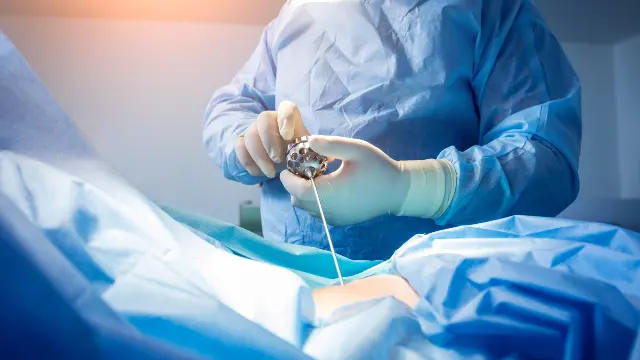
In an endoscopic forehead lift, the surgeon makes several small incisions hidden within the hair-bearing scalp behind the hairline. An endoscope inserted through one of these incisions provides a magnified view of the space beneath the forehead, allowing the surgeon to release tissue attachments and reposition the brow while directly visualizing the important structures in the area. Because the incisions are small and concealed behind the hairline, visible scarring tends to be limited compared with longer open approaches.
The endoscopic approach is not automatically the right choice for everyone. Factors such as forehead height, hairline position and density, the degree of brow descent, and individual anatomy all influence which technique a surgeon recommends. In some situations, an open or hairline-based approach may be more suitable. The choice of technique is a surgical judgment made for each person, and it is a reasonable topic to discuss openly during a consultation.
Who May Be a Candidate
Candidacy for an endoscopic forehead lift is individual, but some general patterns are helpful to understand.
People who are often reasonable candidates share features such as genuine brow descent contributing to a heavy or tired upper-face appearance, generally good health, realistic expectations, and a hairline and forehead anatomy suited to the endoscopic technique. Someone whose main concern is that their brows sit low and press down on the eyes, verified on examination to be a brow problem rather than only eyelid skin, may be a candidate. Age itself is not the deciding factor; the pattern and cause of the changes matter more.
Several factors influence risk and suitability and should be discussed candidly. Smoking impairs healing and increases the risk of wound and skin problems, and surgeons commonly ask patients to stop for a defined period around surgery. Certain hairline characteristics, a history of prior forehead or brow surgery, bleeding tendencies, some medications and supplements, and a tendency toward problematic scarring are all relevant. Realistic expectations are essential as well: a forehead lift repositions the brow and can soften some lines, but it does not resurface skin, erase all wrinkles, or stop the natural aging process.
A thorough consultation includes a medical history, an examination of the brow position and forehead anatomy, and a discussion of goals, along with the brow-versus-eyelid assessment described above. The aim is to confirm both that surgery is appropriate for you and that this particular procedure addresses your actual concern.
How the Procedure Is Generally Approached
The specific surgical steps, anesthesia, fixation methods, and operative time are decided case by case and depend on the individual and the operating surgeon's assessment. The description below is a general overview of the concepts, not a step-by-step protocol or a description of any single clinic's exact methods.
In broad terms, the surgeon makes several small incisions concealed within the scalp behind the hairline. Working with an endoscope for direct visualization, the surgeon releases the tissue attachments that hold the forehead and brow down, repositions the brow to a more elevated and youthful height, and secures the tissues in their new position. The small incisions are then closed. Because the forehead contains sensory nerves and important fixed attachments, careful dissection is required to elevate the brow while protecting these structures.
The endoscopic method is chosen specifically to accomplish this through small, hidden openings rather than a long incision. When patients are selected appropriately, this approach can provide reliable brow elevation, though as with any surgery the outcome depends on the individual, the anatomy, and the healing process.
Recovery in General Terms
Recovery from an endoscopic forehead lift takes real time, even though the incisions are small. It is surgery beneath the forehead tissues, and healing follows its own course.
In the early days after surgery, swelling and bruising are expected, and these may spread into the forehead and around the eyes before subsiding gradually over the following weeks. Numbness, tingling, or itching of the forehead and scalp near the incisions is common and typically improves over weeks to months as the nerves recover, though the timeline varies. Some tightness across the forehead is normal early on. Many people return to low-key daily activities within a couple of weeks, but the exact timing for work, exercise, and social events depends on the individual, the extent of surgery, and how visible any bruising remains.
Final results emerge gradually as swelling resolves and tissues settle, which can take a number of months. Scars within the scalp are generally well concealed by hair, but like all scars they mature over an extended period. Following your surgeon's aftercare instructions, protecting healing skin from the sun, avoiding smoking, and attending follow-up appointments all support recovery. Specific medication, activity restrictions, and pain-management guidance come from the operating clinic and should be confirmed directly with them, since they are tailored to your case.
Risks and Possible Complications
Every surgical forehead lift carries real risks. Understanding them is part of making an informed decision, and the point of listing them is clarity, not alarm.
General surgical risks include bleeding, infection, and reactions to anesthesia. Beyond these, several risks are more specific to the forehead and brow region. Injury to sensory nerves can cause numbness of the forehead or scalp, which is common early and usually temporary but can occasionally persist. Injury to the nerve branches that move the forehead can, less commonly, affect the ability to raise the eyebrows or cause asymmetry of brow movement.
Other possibilities include changes to the hairline or areas of hair thinning near the incisions, visible or widened scars, asymmetry between the two brows, over-elevation that can create a surprised look or under-elevation that leaves the concern incompletely addressed, and results that do not fully meet your goals. Relapse of some brow descent over time is also possible, since the face continues to age. In some cases, a revision may be considered. Smoking meaningfully increases healing-related risks and is an important factor to discuss.
The right way to weigh these risks is in a personal consultation, where a surgeon can examine your anatomy, review your health, and explain how these general risks apply specifically to you. To learn more, you can review the clinic's information and Dr. Ham's profile and then arrange to discuss your goals directly.
Frequently Asked Questions
Is an endoscopic forehead lift a real surgical procedure?
Yes. An endoscopic forehead lift is a genuine surgical brow lift performed through several small incisions hidden behind the hairline, using an endoscope for visualization. It is not a non-surgical or injectable treatment. The "endoscopic" part refers to the camera-assisted technique that allows the surgery to be done through small openings rather than a long incision.
How is it different from a traditional forehead lift?
The main difference is the incisions. A traditional forehead lift may use a longer incision across the scalp or along the hairline, while the endoscopic approach uses several small, concealed incisions and an endoscope. The endoscopic method can mean less visible scarring, but it is not right for everyone, and the best technique depends on your anatomy and the surgeon's assessment.
Should I get a brow lift or eyelid surgery?
That depends on where the heaviness around your eyes is coming from. If the brow itself has descended, a forehead lift may be appropriate; if the issue is mainly excess upper-eyelid skin with a well-positioned brow, an eyelid procedure may be better, and sometimes both are considered. Only an in-person examination can determine which applies to you.
What are the main risks?
Risks include bleeding, infection, numbness of the forehead or scalp, possible weakness or asymmetry of brow movement, hairline changes or hair thinning near incisions, scarring, over- or under-elevation of the brows, and results that may not fully meet your goals. Most numbness is temporary, but some risks can persist. Smoking increases healing-related risks, so it is important to discuss.
Will the results be permanent?
No procedure stops aging. A forehead lift repositions the brow and forehead tissues at one point in time, but the face continues to age afterward, so some relapse over the years is possible. Results also vary from person to person, and no specific duration can be guaranteed. A realistic discussion of longevity is a normal part of planning.
Will there be visible scars?
The incisions for an endoscopic forehead lift are placed within the hair-bearing scalp behind the hairline, so scars are generally well concealed by hair. That said, scarring is individual, and there is always some risk of visible, widened, or otherwise imperfect scars, as well as hairline changes. Your surgeon can discuss what is realistic for your hairline and skin.
The Bottom Line
An endoscopic forehead lift is a genuine surgical brow lift that raises descended brows and rejuvenates the upper face through several small incisions hidden behind the hairline.
A careful evaluation should distinguish brow descent from excess eyelid skin, because that determines whether a forehead lift, an eyelid procedure, or a combination is appropriate.
The endoscopic approach can limit visible scarring, but it is not right for every person, and the choice of technique is individual.
Real surgical risks include bleeding, infection, nerve-related numbness or brow-movement changes, hairline changes, scarring, asymmetry, and over- or under-correction.
Results vary, are not permanent, and cannot be guaranteed; a personal consultation is the only reliable way to determine suitability.
This article is for general education only. It describes surgical procedures in broad terms, and surgical results vary from person to person. It is not medical advice, does not create a doctor-patient relationship, and is not a self-diagnosis tool. Only a qualified surgeon who examines you in person can advise whether any procedure is appropriate for you. Always confirm specific details, including candidacy, technique, and aftercare, directly with the clinic.
More Articles
Continue reading our clinical guides.

Guide to Nose Surgery: Procedure Basics Explained
Guide to nose surgery: Discover procedure basics, preparation, recovery, and expected results. Learn what to expect and explore your options today.
Learn More

What to Know Before Eye Surgery
What to know before eye surgery: Learn about preparation, risks, recovery, and what to expect for a safer, more confident procedure. Read more today.
Learn More
Revision Rhinoplasty in South Korea: US Patient Guide
A practical guide to revision rhinoplasty in South Korea for US patients: why second nose surgery is more complex, cartilage graft realities, and risks.
Learn More