17+ Years of Personalized Eye, Nose & Lifting Plastic Surgery in Gangnam, Seoul

Medical Guide
Epicanthoplasty: Inner Corner Eye Surgery Explained
Epicanthoplasty, or inner corner eye surgery, subtly widens the eye by reshaping the epicanthal fold. Learn how it works, recovery, scarring, and risks.
Schedule a ConsultationEpicanthoplasty: Inner Corner Eye Surgery Explained
Medically reviewed by Dr. Kiweon Ham, Board-Certified Plastic Surgeon in South Korea, Chief Director, Gonggan Plastic Surgery
Epicanthoplasty is a surgical procedure that reshapes the small fold of skin at the inner corner of the eye. That fold, called the epicanthal fold, partially covers the pink triangle of tissue near the nose (the caruncle) in many people. By releasing or repositioning it, a surgeon can make the eye opening appear longer horizontally and more open toward the nose. It is one of the most commonly requested eye procedures for patients of East Asian descent, and it is frequently performed alongside double-eyelid surgery rather than on its own.
This guide explains what epicanthoplasty involves, how it is planned, what recovery tends to look like, and — just as importantly — where its limits lie. Scarring near the inner corner is a genuine consideration, reversibility is not guaranteed, and the "right" result is entirely a matter of individual anatomy and personal preference. There is no single ideal eye shape, and this article does not treat any outcome as more desirable than another. The goal here is to help you ask informed questions before you ever sit down for a consultation.
What Is Epicanthoplasty?
Epicanthoplasty is a form of eyelid surgery focused specifically on the medial canthus — the inner corner of the eye where the upper and lower lids meet near the nose. When a prominent epicanthal fold is present, it can visually shorten the horizontal length of the eye and soften the definition of the inner corner. Epicanthoplasty adjusts that fold so the inner corner is more exposed and the eye reads as slightly wider.
The procedure sits within the broader family of eyelid surgery, which the American Society of Plastic Surgeons describes as surgical manipulation of the upper or lower eyelids for functional or aesthetic reasons. Unlike double-eyelid surgery, which creates or refines the crease across the upper lid, epicanthoplasty is concerned with the horizontal dimension and the inner corner specifically. Because these two goals often complement each other, many patients discuss them together during a single consultation.
It is worth being precise about language. "Widening the eye" here refers to a modest change in how the inner corner is shaped and exposed, not to a dramatic transformation. Results vary considerably from person to person based on skin thickness, the strength and orientation of the fold, and the underlying bone and soft-tissue structure.
Understanding the Epicanthal Fold
The epicanthal fold is a fibromuscular skin fold that covers the inner aspect of the eye. Its prominence differs widely among individuals and populations, and it is a normal anatomical feature — not a defect. In some people the fold is minimal; in others it substantially overlaps the caruncle and the innermost portion of the eye.
Because the skin and muscle in this region are delicate and the area is under natural tension, the inner corner behaves differently from the mid-portion of the eyelid during healing. Surgeons plan epicanthoplasty around the direction of that tension, the position of the tear-related structures at the inner corner, and the amount of fold to be released. Over-releasing the fold can create an unnatural, overly rounded, or overly exposed inner corner, which is one reason conservative, individualized planning matters.
Understanding your own anatomy is the first step. During an in-person assessment, a surgeon evaluates the shape, size, and tension of your fold, the distance between your eyes, and how the inner corner relates to the rest of your eyelid and nose. This is why photographs and online simulations can only go so far; the fold must be examined directly.
Why People Consider Epicanthoplasty
Motivations are personal and varied. Some people feel their eyes look shorter or more "closed" toward the nose and want the inner corner to be more defined. Others are having double-eyelid surgery and find that adjusting the fold helps the new crease flow more naturally into the inner corner. In some cases the fold pulls on the crease, and addressing both at once produces a more harmonious result than treating either alone.
It is important to frame these as aesthetic preferences rather than improvements in worth or attractiveness. Eye shape is deeply tied to identity and, for many patients, to cultural heritage. A responsible consultation respects that and centers on what you want your eyes to look like — not on any external standard. A surgeon's role is to explain what is anatomically achievable, what is not, and what trade-offs each option carries, so that your decision is fully your own.
At Gonggan Plastic Surgery, epicanthoplasty is among the eye procedures within Dr. Kiweon Ham's documented core specializations. You can read more about the clinic's approach on the Gonggan Plastic Surgerywebsite and review the surgeon's background on the Dr. Kiweon Ham profile page.
Techniques Used in Epicanthoplasty
There is no single method. Surgeons choose among several approaches based on your fold, your goals, and the direction in which the skin needs to move. What follows is a general overview; the specific technique for any individual is decided in person.
Common medial (inner corner) approaches
Many epicanthoplasty techniques rearrange the skin at the inner corner using small, carefully planned incisions. Some methods reposition the fold using a Z-shaped or similar geometric design so that tension is redistributed and the resulting scar is placed along a less conspicuous line. Others use a skin-redraping concept that repositions tissue with the aim of reducing a visible vertical scar. Each approach has trade-offs in terms of how much correction is possible and how the scar tends to settle.
The shared principle is control: a surgeon aims to release only as much of the fold as your anatomy and goals require. More aggressive release can expose more of the inner corner but also raises the risk of an unnatural appearance and more noticeable scarring.
Combining epicanthoplasty with double-eyelid surgery
Epicanthoplasty is frequently performed at the same time as double-eyelid (upper blepharoplasty) surgery. When the crease and the inner corner are addressed together, the surgeon can plan how the new crease meets the inner corner so the two transitions look continuous. Whether combining procedures is appropriate for you depends on your anatomy and goals, and it is a decision to make with your surgeon — not a foregone conclusion.
Am I a Candidate?
Candidacy is individualized. In general, people considered for epicanthoplasty are in good overall health, have realistic expectations, and have a prominent epicanthal fold that they wish to reshape. A thorough medical history is essential. Conditions that affect healing or bleeding, a personal or family history of thick or raised (hypertrophic or keloid) scars, dry-eye tendencies, and prior eyelid surgery all influence whether the procedure is advisable and which technique makes sense.
A history of hypertrophic scarring deserves particular attention. Candidates for inner-corner surgery can be more prone to noticeable scarring in this area, so a frank discussion of your scarring history is part of responsible planning. If you have had previous eye surgery, altered anatomy and existing scar tissue can make a new procedure more complex and less predictable.
Only an in-person evaluation can determine whether epicanthoplasty is suitable for you. Be wary of any promise of a specific result made before such an examination.
The Consultation and What to Expect
A meaningful consultation covers your goals in your own words, a direct examination of your eyelids and inner corners, a review of your medical and surgical history, and an honest explanation of what is and is not achievable. Your surgeon should describe the proposed technique, where incisions will fall, how scars are expected to mature, and the realistic range of outcomes.
Specifics such as anesthesia choices, the exact surgical plan, scheduling, and cost are determined by the clinic and your individual circumstances. This article does not cover pricing or anesthesia details; confirm those directly with the clinic. You can start that conversation through the Gonggan Plastic Surgery website.
The procedure itself is typically performed on an outpatient basis, meaning most patients go home the same day. Fine sutures are used at the inner corner, and your surgeon will explain when and how they are removed or when they dissolve.
Recovery and Healing Timeline
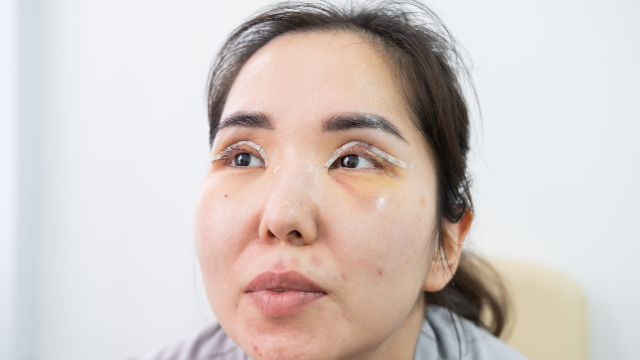
Recovery from eyelid procedures generally follows a broad pattern, though timelines vary by person and by how much surgery was done. In the first days after surgery, swelling, bruising, and tightness around the inner corners are expected. Cool compresses, keeping the head elevated, and avoiding strenuous activity are commonly advised to help swelling subside. As a general reference point for eyelid surgery, bruising and swelling often lessen substantially over roughly one to two weeks, but the inner corner can remain sensitive and slightly pink for longer.
Sutures are generally removed within about a week if they are not self-dissolving. Most people can return to light daily activities fairly quickly, while avoiding rubbing the eyes, contact lenses, and heavy exertion for the period your surgeon specifies. It is normal for the final settled appearance to take weeks to months to emerge, because scars need time to soften and fade and residual swelling resolves gradually. Protecting the delicate skin from sun exposure during healing is important, as is following your surgeon's aftercare instructions closely.
Follow-up visits let your surgeon monitor healing and address early concerns. Report any severe pain, significant bleeding, spreading redness, or vision changes to your care team promptly.
Scarring: The Honest Reality
Scarring is the single most important thing to understand about epicanthoplasty. Any incision leaves a scar, and the inner corner is a visible, high-tension area. Surgeons design incisions to fall along less conspicuous lines and use techniques intended to minimize their appearance, but a scar is unavoidable. In most people scars mature and fade over months, becoming inconspicuous — yet they do not vanish entirely.
Some patients, particularly those with a tendency toward hypertrophic or keloid scarring, may develop thicker or more visible scars at the inner corner. This risk is one reason your scarring history matters so much during planning. Even with careful technique, scar maturation is partly determined by your individual biology and cannot be guaranteed. Ask your surgeon to show you the expected scar location and to explain how they manage scars if they thicken.
Reversibility and Its Limits
Epicanthoplasty is best approached as a permanent change. Once the fold has been released or repositioned and the skin has healed, the anatomy has been altered. Revision surgery to soften an over-corrected inner corner or to reconstruct a fold is sometimes possible, but it is more complex than the original procedure, works within existing scar tissue, and cannot be counted on to restore the original appearance. In other words, reversibility is limited and never assured.
For this reason, a conservative first operation is often prudent. It is generally easier to do a little more later than to undo an over-aggressive release. Discuss with your surgeon how much correction is planned and why.
Risks and Possible Complications
Every surgery carries risk. For eyelid procedures, general and specific risks include bleeding, infection, reaction to anesthesia, dry or irritated eyes, temporary blurred vision, asymmetry between the two sides, and the need for follow-up or revision surgery. Serious complications are uncommon, but no procedure is risk-free.
Risks that are especially relevant to inner-corner surgery include noticeable or thickened scarring, an unnatural or overly rounded inner corner from over-release, under-correction that leaves the fold more prominent than desired, and small asymmetries between the eyes. Because the inner corner sits near tear-related structures, changes to tearing or eye comfort are also possible and should be discussed. A realistic understanding of these possibilities — and of the fact that results vary — is essential before proceeding.
Choosing a Qualified Surgeon
Eyelid surgery is technically demanding and takes place in a small, delicate, highly visible area. The American Society of Plastic Surgeons emphasizes selecting an appropriately trained and qualified surgeon, asking directly about their training and experience with the specific procedure, and confirming the facility where surgery will be performed. Ask to see how the surgeon plans incisions, how they handle scars, and how they manage complications or the need for revision.
Dr. Kiweon Ham is documented as a Board-Certified Plastic Surgeon in South Korea and Chief Director at Gonggan Plastic Surgery, with eye surgery among his documented specializations. Note that this is a Korean specialty board, which is distinct from any United States certification. You can review his documented education, training, and society memberships on the Dr. Kiweon Ham profile page. Whichever surgeon you consider, verify credentials directly and make sure your questions are answered fully before deciding.
Frequently Asked Questions
Does epicanthoplasty leave a visible scar?
Yes, any incision leaves a scar, and the inner corner is a visible area. Surgeons plan incisions along less conspicuous lines and use techniques meant to minimize appearance, and most scars fade and become inconspicuous over months. However, scars never disappear entirely, and some people are more prone to thicker scarring based on their individual healing.
Is epicanthoplasty reversible?
It is best considered permanent. Revision to soften an over-corrected corner or rebuild a fold is sometimes possible, but it is more complex than the first surgery, works within existing scar tissue, and cannot be guaranteed to restore your original appearance. Because of this, many surgeons favor a conservative initial correction.
Is epicanthoplasty usually done with double-eyelid surgery?
Frequently, yes. Because the inner-corner fold and the upper-lid crease affect each other, the two procedures are often planned together so the transitions look continuous. Whether combining them is right for you depends on your anatomy and goals and should be decided in person with your surgeon.
How long does recovery take?
Swelling and bruising are expected in the first days and generally lessen substantially over roughly one to two weeks, though this varies by person. Sutures are often removed within about a week if they are not self-dissolving. The final settled appearance can take weeks to months as scars soften and residual swelling resolves.
Will epicanthoplasty make my eyes look bigger?
It can make the eye opening appear longer toward the nose and the inner corner more exposed, which some people perceive as a more open look. The degree of change is modest and depends heavily on your individual anatomy. There is no single ideal eye shape, and results vary from person to person.
Who is not a good candidate?
Candidacy is individualized, but caution is warranted for people with a strong tendency toward thick or keloid scars, significant dry-eye problems, certain healing or bleeding conditions, or unrealistic expectations. A history of prior eye surgery can also make the procedure more complex. Only an in-person evaluation can determine suitability.
How do I find out the cost and anesthesia details?
Pricing, payment options, and anesthesia specifics depend on your individual plan and are set by the clinic, so they are not covered here. Contact Gonggan Plastic Surgery directly through its website to discuss these details for your situation.
The Bottom Line
Epicanthoplasty reshapes the epicanthal fold at the inner corner of the eye, making the eye opening appear longer toward the nose; it is often combined with double-eyelid surgery.
Scarring is a genuine and unavoidable consideration in this visible, high-tension area, and some people are more prone to thicker scars based on individual healing.
The procedure should be treated as permanent; reversibility is limited and revision is more complex and not guaranteed to restore the original appearance.
Real risks include asymmetry, over- or under-correction, dry or irritated eyes, infection, bleeding, and the possible need for revision, and results vary by individual.
There is no universally ideal eye shape; decisions should reflect your own goals, and candidacy and technique can only be determined through an in-person evaluation.
This article is for general education only. It reflects general information about epicanthoplasty and eyelid surgery, not personalized medical advice, and individual results vary. It is not a substitute for a professional consultation and is not a self-diagnosis tool. Always seek evaluation and guidance from a qualified surgeon or physician about your specific situation, and confirm procedure details, candidacy, and costs directly with the clinic.
More Articles
Continue reading our clinical guides.

Guide to Nose Surgery: Procedure Basics Explained
Guide to nose surgery: Discover procedure basics, preparation, recovery, and expected results. Learn what to expect and explore your options today.
Learn More

What to Know Before Eye Surgery
What to know before eye surgery: Learn about preparation, risks, recovery, and what to expect for a safer, more confident procedure. Read more today.
Learn More

Revision Rhinoplasty in South Korea: US Patient Guide
A practical guide to revision rhinoplasty in South Korea for US patients: why second nose surgery is more complex, cartilage graft realities, and risks.
Learn More