17+ Years of Personalized Eye, Nose & Lifting Plastic Surgery in Gangnam, Seoul

Medical Guide
Implant-Free Rhinoplasty: Your Own Cartilage as Support
Implant-free rhinoplasty uses your own septal, ear, or rib cartilage instead of silicone. Learn the trade-offs, recovery, and risks with Dr. Kiweon Ham.
Schedule a ConsultationImplant-Free Rhinoplasty: Your Own Cartilage as Support
Medically reviewed by Dr. Kiweon Ham, Board-Certified Plastic Surgeon in South Korea, Chief Director, Gonggan Plastic Surgery
When most people imagine a nose job, they picture an implant being placed to raise the bridge. That is one approach, but it is not the only one. Implant-free rhinoplasty is a structural technique that reshapes and supports the nose using the patient's own cartilage rather than a synthetic silicone implant. It is one option among several, and it comes with its own set of advantages and trade-offs. This guide explains how implant-free rhinoplasty works, where the cartilage comes from, who might consider it, and what recovery and risks look like, so you can have a more informed conversation with a qualified surgeon.
At Gonggan Plastic Surgery in Seoul, rhinoplasty is approached as an individualized procedure. There is no single technique or material that is right for everyone, and the goal here is to describe the implant-free option neutrally rather than to promote it as universally "better" or "safer" than an implant-based approach.
What "Implant-Free" Actually Means
In rhinoplasty, surgeons use materials to add height, projection, or definition to the nose and to give the reshaped structure lasting support. Broadly, these materials fall into two categories. The first is a synthetic implant, most commonly silicone, which is manufactured and placed to augment the bridge. The second is autologous tissue, meaning tissue taken from your own body, most often cartilage.
Implant-free rhinoplasty relies on the second category. Instead of inserting a silicone implant, the surgeon harvests cartilage from elsewhere in the patient's own body and uses it to build up, reinforce, or refine the nasal framework. Because the material comes from the patient, it is biologically the patient's own tissue rather than a foreign object.
This distinction matters because the nose is not just skin over a bump. It is a three-dimensional structure of bone and cartilage, and lasting aesthetic results depend on giving that structure sound support. Implant-free techniques are often described as "structural" rhinoplasty for this reason: the emphasis is on rebuilding and reinforcing the nasal framework with grafts rather than resting height on a single implant.
It is worth stating plainly that implant-free is an option with trade-offs, not an automatic upgrade. Silicone implants remain a widely used and reasonable choice for many patients. The right decision depends on your anatomy, your goals, how much augmentation you need, whether you have had previous surgery, and the judgment of your surgeon after an in-person evaluation.
Where the Cartilage Comes From
Because implant-free rhinoplasty uses your own cartilage, the surgeon must harvest it from a donor site. According to Gonggan Plastic Surgery's documented rhinoplasty materials, the structural options include septal cartilage, ear cartilage, and rib cartilage (autologous or donor), along with dermal grafts and other structural grafting methods. Each source has different properties, and each carries its own considerations.
Septal Cartilage
The nasal septum, the wall of cartilage that divides the two nostrils, is a common first choice. Because it is already inside the nose, harvesting it does not require an additional donor site elsewhere on the body. Septal cartilage is relatively straight and firm, which makes it useful for building support structures such as tip grafts and struts. The main limitation is quantity: there is only so much septal cartilage available, and it may already be depleted in patients who have had prior nasal surgery.
Ear (Conchal) Cartilage
Cartilage can be harvested from the bowl of the ear (the concha). It is naturally curved, which can be an advantage for certain contouring goals but less ideal where a straight, rigid support is needed. Harvesting ear cartilage involves an incision on or behind the ear, which introduces a small donor-site scar and its own healing considerations. The overall shape of the ear is generally preserved when the harvest is planned carefully.
Rib Cartilage
When larger amounts of cartilage or stronger structural support are needed, rib cartilage may be used. It provides a substantial volume of firm material, which can be valuable in more complex reconstructions or revision cases where other sources are exhausted. The trade-offs are more significant: harvesting rib cartilage requires an incision on the chest, adds to the length and complexity of surgery, and creates a separate donor site with its own recovery, discomfort, and scar. In some cases, processed donor (cadaveric) rib cartilage may be discussed as an alternative to harvesting the patient's own rib. Whether any of these is appropriate is an individualized decision.
The choice of donor site is not a menu the patient simply orders from. It depends on how much cartilage the specific goals require, the quality and availability of tissue, and the surgeon's assessment. Dr. Kiweon Ham's documented specializations include implant-free rhinoplasty as well as revision nasal surgery; you can review his background on his surgeon profile page.
Potential Advantages and Trade-Offs
It is tempting to frame the implant-versus-cartilage decision as a simple "which is safer" question. It is not that simple, and reputable surgeons avoid blanket claims. Both silicone implants and autologous cartilage are legitimate, widely used materials. What follows are considerations often discussed, not guarantees or superiority claims.
Possible advantages often associated with autologous cartilage:
Because the tissue comes from your own body, it is not a synthetic foreign object.
Structural grafting can integrate with the surrounding nasal framework over time.
For patients who prefer to avoid a manufactured implant, it offers an alternative route to augmentation and support.
Trade-offs and limitations to weigh:
A donor site is required. Harvesting cartilage from the septum, ear, or rib means an additional incision and its own healing, and rib harvest in particular adds surgical time and a chest scar.
Cartilage availability is finite. Patients with prior surgery may have limited septal cartilage remaining, which can push the plan toward ear or rib sources.
Harvested cartilage can, over time, be subject to warping, resorption (partial reabsorption), or shifting, which are recognized considerations in structural rhinoplasty.
Surgery may be longer and more involved than a straightforward implant placement.
Silicone implants, for their part, avoid a donor site and offer predictable, ready-made shaping, but they carry their own distinct considerations that a surgeon will discuss. The point is that neither option is universally correct. The materials should be described neutrally, and the decision should be made together with a qualified surgeon based on your individual anatomy and goals.
Who Might Consider Implant-Free Rhinoplasty
There is no universal candidate profile, and only an in-person evaluation can determine suitability. That said, implant-free approaches are frequently part of the discussion in situations such as:
Patients who specifically wish to avoid a synthetic implant and prefer autologous tissue.
Cases needing structural reinforcement of the tip or bridge where grafts provide targeted support.
Revision rhinoplasty, where prior surgery, scar tissue, or a previous implant makes a structural, cartilage-based rebuild appropriate. Revision cases are more complex than primary surgery, and no full correction can be promised.
Noses where the surgeon judges that grafting will better achieve the patient's goals than an implant.
Equally, some patients are better served by other approaches. Factors such as thin or thick skin, the amount of augmentation desired, prior surgeries, and overall health all influence the recommendation. A thorough consultation, including examination of the nose and a discussion of realistic goals, is essential.
What the Procedure and Recovery Involve
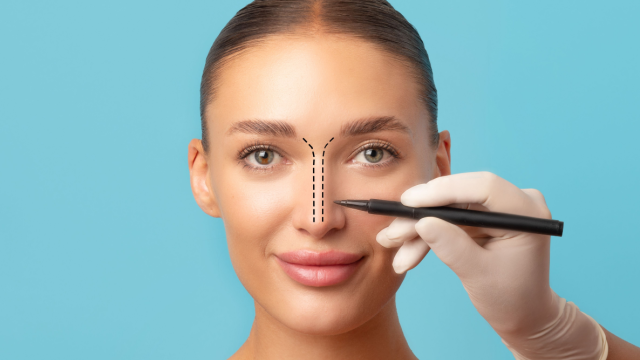
Rhinoplasty can be performed through an open approach (a small incision across the columella, the strip of tissue between the nostrils) or a closed approach (incisions hidden inside the nostrils). Structural, graft-based work is often done through an open approach because it gives the surgeon direct visualization to place and secure grafts, though the choice depends on the case.
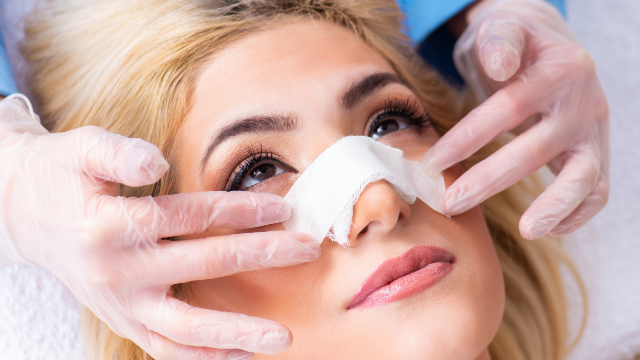
During surgery, the surgeon harvests the chosen cartilage, shapes it, and positions it to augment or reinforce the nasal framework, securing grafts with sutures. When rib cartilage is used, the chest donor site is closed separately. The nose is typically supported afterward with a splint, and there may be internal support as well.
Recovery generally involves swelling and bruising, especially around the eyes, in the first one to two weeks. Most visible bruising and the external splint resolve within roughly the first two weeks, but this varies. Importantly, the nose continues to refine for many months. Residual swelling, particularly at the tip, can take a year or longer to fully settle, and the final result is judged over that longer horizon rather than immediately. Donor sites add their own recovery: an ear harvest site or a chest incision from rib harvest will have their own healing and discomfort.
Every surgeon's specific pre-operative instructions, anesthesia plan, and aftercare protocol differ, and Gonggan Plastic Surgery has not published those details for this market. Confirm the specifics directly with the clinic during your consultation.
Realistic Risks
Rhinoplasty is real surgery and carries real risks, regardless of whether an implant or autologous cartilage is used. General surgical and anesthesia risks include bleeding, infection, adverse reactions to anesthesia, and delayed healing. Rhinoplasty-specific risks include asymmetry, an appearance or contour you are not satisfied with, changes in breathing or nasal airflow, numbness, and visible or internal scarring.
Implant-free techniques add donor-site-specific considerations. Cartilage grafts can warp, partially resorb, or shift over time, which may affect the shape. Harvest sites carry their own risks: an ear harvest can affect the ear contour, and rib harvest carries risks associated with a chest incision. There is also the possibility that a further procedure, or revision, may be needed to address an outcome. No surgeon can guarantee a specific result, and results vary from person to person. A candid discussion of these risks with your surgeon is part of informed consent.
Choosing a Qualified Surgeon
Whatever material or technique you consider, the single most important decision is the surgeon. Look for a surgeon with formal plastic surgery training and specific experience in rhinoplasty, including the structural grafting techniques relevant to implant-free surgery. Ask to see relevant before-and-after examples, discuss your goals openly, and make sure you understand the plan, the material choices, and the risks before proceeding.
Dr. Kiweon Ham is documented as a Board-Certified Plastic Surgeon in South Korea and Chief Director of Gonggan Plastic Surgery, with core specializations that include rhinoplasty, nasal tip surgery, alar reduction, and implant-free rhinoplasty. If you are researching your options, you can learn more about the clinic's approach at Gonggan Plastic Surgery and review Dr. Ham's credentials and training on his doctor profile.
Frequently Asked Questions
Is implant-free rhinoplasty safer than using a silicone implant?
Neither option is universally "safer." Both autologous cartilage and silicone implants are legitimate, widely used materials, and each has its own advantages and trade-offs. The better choice depends on your anatomy, your goals, and your surgeon's assessment during an in-person evaluation. A responsible surgeon will present both options neutrally rather than claiming one is superior for everyone.
Where does the cartilage come from?
In implant-free rhinoplasty, cartilage is harvested from your own body. Common sources are the nasal septum, the ear (conchal cartilage), and the rib. Septal cartilage avoids an extra donor site but is limited in quantity, while rib cartilage offers more material at the cost of a chest incision and longer surgery. Your surgeon chooses the source based on how much cartilage your goals require and what is available.
Will there be a scar where the cartilage is taken from?
Yes, any donor site involves an incision and therefore some scarring. Septal cartilage is taken from inside the nose, so there is no visible external donor scar. Ear cartilage harvest leaves a small scar on or behind the ear, and rib cartilage harvest leaves a scar on the chest. Your surgeon can explain where incisions will be placed and how they are typically managed.
How long does recovery take?
Most visible bruising and swelling improve over the first one to two weeks, and the external splint is usually removed within that window. However, the nose continues to refine for many months, and residual swelling at the tip can take a year or longer to fully settle. Donor sites, such as an ear or chest incision, have their own separate healing timelines.
Can implant-free rhinoplasty be used for revision surgery?
It can be part of the plan in revision cases, especially when a previous implant is being removed or when structural rebuilding is needed. However, revision rhinoplasty is more complex than primary surgery because of scar tissue and altered anatomy, and no full correction can be guaranteed. Candidacy is highly individual and requires a careful evaluation.
Can cartilage grafts change shape over time?
Yes, this is a recognized consideration. Autologous cartilage grafts can warp, partially resorb (be reabsorbed), or shift over time, which may affect the final appearance. Surgical techniques aim to minimize this, but it cannot be eliminated entirely. This is one of the trade-offs to discuss with your surgeon when weighing your options.
Do I need to travel to Korea for this procedure?
That depends entirely on your personal circumstances and where you choose to have surgery. If you are considering care abroad, plan carefully, verify current travel and entry requirements with the appropriate embassy or consulate, and confirm all logistics directly with the clinic. The most important factors are the surgeon's qualifications and a thorough consultation, wherever you decide to have your procedure.
The Bottom Line
Implant-free rhinoplasty reshapes and supports the nose using your own cartilage, taken from the septum, ear, or rib, instead of a silicone implant.
It is one option with genuine trade-offs, not a universally "safer" or "better" choice; both cartilage and implants are legitimate materials, and the right choice is individual.
Autologous cartilage requires a donor site and its own healing, and grafts can warp, resorb, or shift over time.
Rhinoplasty carries real risks, including bleeding, infection, asymmetry, breathing changes, and the possibility of needing revision; results vary and cannot be guaranteed.
The most important step is a thorough in-person consultation with a qualified, experienced surgeon who explains your material options neutrally.
This article is for general education only. It reflects widely accepted, general information about implant-free rhinoplasty and does not constitute medical advice, a diagnosis, a treatment recommendation, or a promise of any particular result. Outcomes vary from person to person, and only a qualified surgeon who examines you in person can determine whether any procedure is appropriate for you. This article is not a substitute for a professional medical consultation and is not a self-diagnosis tool. Always confirm specific details, including candidacy, techniques, aftercare, and any costs, directly with a licensed medical provider.
More Articles
Continue reading our clinical guides.

Guide to Nose Surgery: Procedure Basics Explained
Guide to nose surgery: Discover procedure basics, preparation, recovery, and expected results. Learn what to expect and explore your options today.
Learn More

What to Know Before Eye Surgery
What to know before eye surgery: Learn about preparation, risks, recovery, and what to expect for a safer, more confident procedure. Read more today.
Learn More
Revision Rhinoplasty in South Korea: US Patient Guide
A practical guide to revision rhinoplasty in South Korea for US patients: why second nose surgery is more complex, cartilage graft realities, and risks.
Learn More