17+ Years of Personalized Eye, Nose & Lifting Plastic Surgery in Gangnam, Seoul

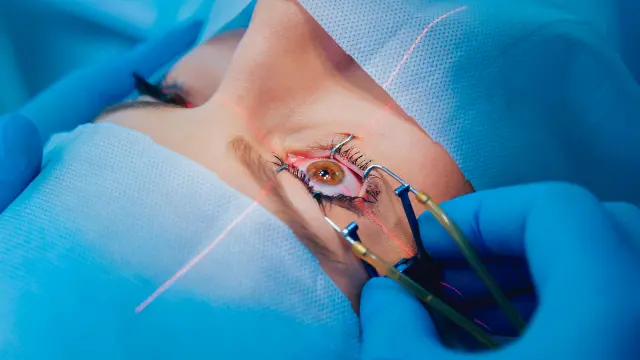
Medical Guide
Is Non-Incisional Double Eyelid Surgery Permanent?
Is non-incisional double eyelid surgery permanent? Learn how buried-suture results can loosen, who is a good candidate, and when a revision may be needed.
Schedule a ConsultationIs Non-Incisional Double Eyelid Surgery Permanent?
Medically reviewed by Dr. Kiweon Ham, Board-Certified Plastic Surgeon in South Korea, Chief Director, Gonggan Plastic Surgery
"Permanent" is one of the most common words people use when they ask about double eyelid surgery, and it is also one of the most misunderstood. If you are considering the non-incisional technique, sometimes called the buried-suture or suture method, it is worth understanding honestly what it can and cannot promise over the long term. The short, candid answer is that non-incisional results are often durable but are generally considered less permanent than results from the incisional method, and they can loosen or fade over time in some patients.
This article explains, in plain terms, how the non-incisional approach works, why its longevity differs from the incisional technique, who tends to be a good candidate, and what happens if a crease weakens or disappears. Throughout, the goal is realism rather than reassurance. Every eyelid is different, results vary from person to person, and no technique can guarantee a crease that lasts forever without any possibility of change.
What Non-Incisional Double Eyelid Surgery Actually Does
Double eyelid surgery, known medically as a form of blepharoplasty and often called Asian blepharoplasty, creates or refines a fold in the upper eyelid so that a defined crease shows when the eye is open. Roughly half of people of East Asian descent naturally have a single eyelid without a well-defined crease, and the procedure is one of the most requested cosmetic operations in this population.
In the non-incisional technique, the surgeon does not make a long cut across the eyelid. Instead, fine sutures are passed through small punctures to create an internal attachment between the skin and the deeper eyelid structures. When the eye opens, this buried connection folds the skin into a crease. Because there is no continuous incision, this approach typically involves less visible scarring and, for many patients, a faster early recovery than the incisional method.
The incisional technique, by contrast, uses a full incision along the planned crease line. This allows the surgeon to remove or reposition skin, muscle, and fat and to form a more structurally fixed fold. That added structural work is the main reason the two methods differ in how long their results tend to last.
Why Non-Incisional Results Are Less Permanent
The durability of a non-incisional crease depends largely on the sutures and the internal adhesion they create. Over months and years, those buried sutures can loosen, and the adhesion between the skin and deeper tissue can weaken. When that happens, the crease may become shallower, uneven, or, in some cases, fade substantially. This is not a sign that something was done incorrectly; it is a recognized limitation of a technique that relies on sutures rather than on a surgically fixed incision line.
Several factors influence how long a non-incisional result holds. Thicker eyelid skin, heavier eyelids with more fat, and stronger muscle activity tend to place more stress on the buried sutures and can shorten how long the crease lasts. Age-related changes to the eyelid over time, along with individual healing and tissue characteristics, also play a role. Because of these variables, two people can have the same procedure and experience quite different longevity.
By comparison, incisional results are generally regarded as longer lasting and more stable, because the fold is created with structural changes rather than sutures alone. This is a genuine trade-off rather than a case of one method being simply "better." Non-incisional surgery offers less scarring and often a quicker early recovery; incisional surgery typically offers greater durability and the ability to address excess skin, fat, or muscle. Neither eliminates the possibility that the eyelid will change over a lifetime.
Candidacy Depends on Your Eyelid Anatomy
Whether the non-incisional technique is a reasonable option for you is not a matter of preference alone; it depends heavily on the anatomy of your eyelids. In general, the buried-suture approach tends to suit people with thinner eyelid skin, minimal excess skin, limited fat, and no significant drooping of the upper eyelid margin. These characteristics allow the buried sutures to hold a crease with less strain.
People with thicker or heavier eyelids, a noticeable amount of excess skin, prominent fat, or drooping of the eyelid, a condition called ptosis, are often better served by an incisional approach or by a combined procedure, because those issues usually cannot be corrected by sutures alone. A physical examination is essential here. A surgeon needs to assess the thickness and elasticity of your skin, the position of your eyelid margin, the amount of fat, muscle tone, and your existing symmetry before recommending one technique over another. This is precisely the kind of assessment that cannot be done reliably from photographs alone.
What Happens If the Crease Loosens or Fades
Because non-incisional results can weaken over time, some patients will eventually want or need a revision. In practice, this can mean repeating or reinforcing the buried-suture procedure, or converting to an incisional technique for a more durable result. Conversion to the incisional method is a recognized pathway when a suture-based crease has repeatedly loosened or when the eyelid's characteristics turn out to be better suited to a structural fold.
It is important to be honest about revision. Any second procedure on the eyelid can be more complex than the first, and it does not come with a guarantee of a perfect or permanent outcome. As with any eyelid surgery, there are real risks to weigh, including bleeding, infection, temporary or, rarely, longer-lasting changes in eyelid position, asymmetry between the two sides, dry or irritated eyes, difficulty fully closing the eyes, and scarring. Sensation and swelling can take weeks to settle, and the final appearance of a crease may continue to refine for months. These possibilities are part of an informed decision and should be discussed candidly during a consultation.
Setting Realistic Expectations
The most useful mindset is to think of the non-incisional technique as a durable but not guaranteed result, rather than a permanent, one-time fix. Many patients enjoy their crease for a long time; others find it softens or changes and choose to have it revised or converted later. Your own outcome will depend on your anatomy, your surgeon's assessment, the technique chosen, and how your tissues heal, all of which vary from person to person.
Choosing a technique should be a shared decision made with a qualified plastic surgeon who has examined your eyelids in person and discussed your goals, the trade-offs between methods, and the realistic possibility of future revision. You can learn more about the approach and background of Chief Director Dr. Kiweon Ham, a Board-Certified Plastic Surgeon in South Korea whose documented focus includes eye surgery, and explore the practice further on the Gonggan Plastic Surgery website. An in-person consultation remains the only way to know which technique genuinely fits your eyelids.
Frequently Asked Questions
Is non-incisional double eyelid surgery truly permanent?
Not in an absolute sense. Non-incisional results are often durable but rely on buried sutures that can loosen over time, so the crease may become shallower, uneven, or fade in some patients. It is more accurate to describe the result as long-lasting for many people rather than guaranteed to be permanent.
How does its longevity compare with the incisional method?
The incisional method is generally regarded as longer lasting because the fold is created with structural changes rather than sutures alone. Non-incisional surgery trades some of that durability for less scarring and often a faster early recovery. Which trade-off suits you depends on your eyelid anatomy and goals.
Who is a good candidate for the non-incisional technique?
It tends to suit people with thinner eyelid skin, minimal excess skin, limited fat, and no significant eyelid drooping. People with heavier eyelids, excess skin, prominent fat, or ptosis are often better served by an incisional or combined approach. Only an in-person examination can confirm which method fits your eyelids.
What can I do if my crease loosens or disappears?
Some patients choose a revision, which may mean repeating or reinforcing the sutures or converting to an incisional technique for a more durable result. Any revision can be more complex than the first surgery and carries its own risks, without a guarantee of a perfect outcome. Discuss these possibilities openly during your consultation.
What are the risks of non-incisional double eyelid surgery?
As with any eyelid surgery, possible risks include bleeding, infection, asymmetry, temporary or rarely longer-lasting changes in eyelid position, dry or irritated eyes, difficulty fully closing the eyes, and scarring. Swelling and sensation can take weeks to settle. A surgeon should review these risks with you in detail before you decide.
Why do I need an in-person exam instead of just sending photos?
Choosing a technique depends on the thickness of your skin, the amount of fat, muscle tone, eyelid position, and symmetry, which are best assessed by physical examination. Photos can begin a conversation but cannot reliably determine candidacy. A hands-on evaluation is needed to recommend a technique and to plan surgery safely.
The Bottom Line
Non-incisional double eyelid surgery is often durable but is generally less permanent than the incisional method, and the crease can loosen or fade over time in some patients.
The technique relies on buried sutures rather than a fixed incision, which explains both its faster early recovery and its lower long-term durability.
Candidacy depends on your eyelid anatomy; thinner, lighter eyelids without excess skin or drooping tend to suit the suture method best.
Some patients need a revision or a later conversion to the incisional technique, and any revision carries real risks and no guarantee of a perfect result.
Results vary from person to person, so the right technique should be chosen with a qualified surgeon after an in-person examination.
This article is for general education only. It explains double eyelid surgery techniques in general terms, individual results and experiences vary, and eyelid surgery carries real risks. It is not medical advice, does not replace an in-person evaluation by a qualified plastic surgeon, and is not a self-diagnosis tool. Any decision about surgery should be made in consultation with a licensed physician who has examined you.
More Articles
Continue reading our clinical guides.

Guide to Nose Surgery: Procedure Basics Explained
Guide to nose surgery: Discover procedure basics, preparation, recovery, and expected results. Learn what to expect and explore your options today.
Learn More

What to Know Before Eye Surgery
What to know before eye surgery: Learn about preparation, risks, recovery, and what to expect for a safer, more confident procedure. Read more today.
Learn More
Revision Rhinoplasty in South Korea: US Patient Guide
A practical guide to revision rhinoplasty in South Korea for US patients: why second nose surgery is more complex, cartilage graft realities, and risks.
Learn More