17+ Years of Personalized Eye, Nose & Lifting Plastic Surgery in Gangnam, Seoul

Medical Guide
Lower Eyelid Fat Repositioning: Preserve, Don't Remove
Lower eyelid fat repositioning smooths tear-trough hollows by preserving orbital fat rather than removing it. See how it works, its risks, and recovery.
Schedule a ConsultationLower Eyelid Fat Repositioning Surgery Explained
Medically reviewed by Dr. Kiweon Ham, Board-Certified Plastic Surgeon in South Korea, Chief Director, Gonggan Plastic Surgery
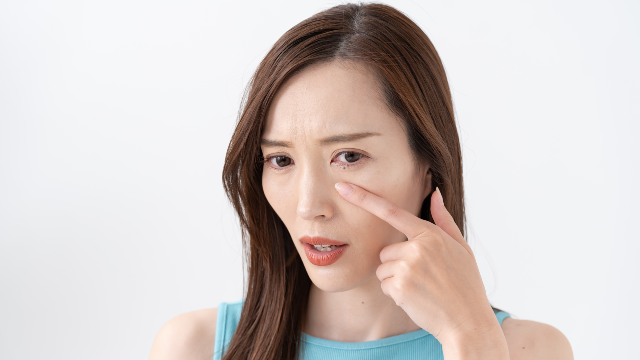
For many people, the first sign of tired-looking eyes is not a wrinkle but a shadow: a groove that runs from the inner corner of the eye diagonally down along the lid-cheek junction, often paired with a small bag just above it. This groove, commonly called the tear trough, and the puffiness above it are among the most frequent reasons patients seek lower-eyelid surgery. For years, the standard surgical answer was to remove the fat that bulges forward under the eye. Today, many surgeons take a different view: rather than removing that fat, they preserve and reposition it to fill the hollow below. This article explains what lower eyelid fat repositioning is, why the shift away from simple fat removal happened, and what the procedure realistically involves, including its risks and limits.
As with any surgical topic, this is general education. The lower eyelid is anatomically delicate, and the right approach depends entirely on your individual anatomy. Only an in-person evaluation by a qualified surgeon can determine what, if anything, is appropriate for you.
Understanding the Tear Trough and Under-Eye Aging
What Creates the Under-Eye Groove
The lower eyelid sits over pockets of fat that cushion the eye within its bony socket. With age, the thin membrane that holds this fat in place (the orbital septum) can weaken, allowing the fat to push forward and create the small bags many people notice under the eyes. At the same time, and often more importantly, the fat and soft tissue of the upper cheek tend to descend and deflate, and the bony rim can lose a little projection. The result is a contrast: a slight bulge of fat above and a hollow groove below, right where the eyelid meets the cheek. That step-off between the bulge and the hollow is what casts the shadow people describe as looking tired, no matter how well rested they are.
Why Removing Fat Is Not Always the Answer
Because the bulge is made of fat, the intuitive solution is to remove it. In some patients that helps. But in many, taking fat away flattens the bulge while doing nothing for the hollow beneath it, and in some cases it can make the under-eye area look more hollow, skeletal, or aged over time, especially as the face continues to lose volume with age. Once orbital fat is removed, it cannot be put back. This is the reasoning behind a preservation-minded approach: instead of discarding the fat that is bulging forward, the surgeon repositions it to fill the groove below, smoothing the transition between eyelid and cheek. The goal is a more even contour rather than a simply flatter one.
What Lower Eyelid Fat Repositioning Is
The Core Idea
In fat repositioning, sometimes described as fat transposition, the surgeon releases the fat that is bulging forward and redrapes or repositions it downward and outward over the bony rim, into or over the tear-trough hollow, then secures it in its new position. Rather than removing volume, the technique redistributes it, using the patient's own tissue to soften the groove. In practice a surgeon may still remove a small amount of excess fat if there is a genuine surplus, but the guiding principle is to preserve and reposition rather than to excise. Whether repositioning, conservative removal, or a combination is appropriate is an individual judgment based on how much fat is present, the depth of the groove, and the quality of the eyelid skin.
Surgical Approaches
Lower-eyelid surgery is generally performed through one of two routes. A transconjunctival approach places the incision on the inside of the lower eyelid, leaving no external skin incision, and is often favored when the main issue is fat position rather than excess skin. A transcutaneous (subciliary) approach places the incision just below the lash line on the outside of the lid and is used when loose skin also needs to be addressed. Fat repositioning can be carried out through either route depending on the anatomy. The choice of approach, and whether any skin is removed or tightened, is individualized. Techniques to support the lower-lid margin may be considered in selected cases to reduce the risk of the lid pulling downward after surgery.
Why the Distinction From Simple Fat Removal Matters
The difference between removing and repositioning fat is not a minor technical footnote; it shapes the long-term appearance of the eye. A flat, fat-removed lower lid may look improved in the short term but can appear hollowed as the surrounding face loses volume in later years. A repositioned result aims to keep the natural fullness of youth while smoothing the specific groove that creates the shadow. That said, repositioning is not automatically superior for everyone. Some people have very little bulging fat and a deep hollow driven mainly by bone and cheek deflation, in which surgery on the eyelid fat alone will not fully address the concern. This is exactly why the surgical plan is tailored to the individual rather than applied as a one-size-fits-all technique. A careful evaluation at Gonggan Plastic Surgery is used to decide which approach, if any, fits a given patient's anatomy and goals.
What Recovery Generally Involves
Recovery varies with the approach used, whether skin was addressed, and individual healing. In general, swelling and bruising around the lower eyelids are expected in the first days to weeks and can be more pronounced with a fat-repositioning technique because tissue has been released and moved. The eyes may feel tight, watery, or gritty early on. Cold compresses, head elevation, and the surgeon's specific aftercare instructions help manage the early phase. Many people feel presentable in public within a couple of weeks, though subtle swelling and firmness where the fat was repositioned can take longer, sometimes months, to fully settle, and the final contour is judged only after that. Strenuous activity, rubbing the eyes, and other restrictions are lifted only on the surgeon's schedule. Timelines and instructions should always come from your own surgical team rather than from general articles.
Risks and Limitations
Lower-eyelid surgery is a real surgical procedure performed in a delicate area, and it carries genuine risks that deserve careful discussion before any decision. General surgical risks include bleeding, hematoma, infection, and anesthesia-related reactions. Risks that are particularly relevant to the lower eyelid include:
Dry eye and irritation. Surgery can temporarily or, less often, persistently affect tear film and eye comfort, causing dryness, watering, or a gritty sensation.
Lower-lid malposition. The lower lid can be pulled downward (retraction) or, in more significant cases, turn outward (ectropion), showing white below the iris or exposing the inner lid. This can require additional treatment or surgery.
Asymmetry and contour irregularity. The two sides may not match perfectly, and the repositioned fat can occasionally feel firm, look uneven, or produce a visible fullness or lump that needs time or further treatment to resolve.
Under- or over-correction. The groove may remain partly visible, or the area may look too full; either can require revision.
Scarring and skin changes. A skin (transcutaneous) approach carries a small external scar and a risk of visible healing changes; a transconjunctival approach avoids an external incision but is not risk-free.
Rare but serious vision-related complications. As with any surgery around the eye, more serious complications, including very rare events affecting vision, are possible and should be discussed with the surgeon.
Fat repositioning also has limits. It cannot correct concerns that come mainly from skin pigmentation, from thin skin showing underlying vessels, or from bone structure, and it does not stop aging; the under-eye area continues to change over time. Results vary from person to person, and no ethical surgeon can promise a specific outcome.
Who May Be a Candidate
This surgery is generally considered for people whose under-eye concern is driven substantially by bulging orbital fat and a tear-trough hollow that could benefit from redistributing that fat, who are in reasonable general health, who understand the recovery and risks, and who have realistic expectations. It is not the right answer for everyone: dark circles caused by pigment alone, fine lines, or hollows driven mainly by bone are not addressed by moving eyelid fat. Existing dry-eye problems, lower-lid laxity, thyroid eye conditions, certain medications, and prior eyelid surgery all affect suitability. The only way to know whether you are a candidate, and which technique fits your anatomy, is a professional evaluation. You can review the surgeon's training and credentials on the profile page for Dr. Kiweon Ham.
Frequently Asked Questions
How is fat repositioning different from removing under-eye fat?
In fat removal, the fat that bulges forward under the eye is taken away. In fat repositioning, that same fat is preserved and moved downward to fill the tear-trough hollow, rather than discarded. The goal of repositioning is a smoother contour that keeps natural fullness, whereas removal alone can sometimes leave the area looking hollow over time.
Will this surgery get rid of my dark circles?
Not necessarily. Dark circles have several causes, including shadowing from the tear-trough groove, thin skin showing underlying blood vessels, and pigmentation. Fat repositioning can help when the darkness is largely a shadow cast by the groove, but it does not treat pigment or thin skin, so an evaluation is needed to identify what is actually causing your dark circles.
Is there a visible scar after lower-eyelid fat repositioning?
It depends on the approach. A transconjunctival technique places the incision inside the eyelid and leaves no external scar, while a transcutaneous approach uses an incision just below the lashes that leaves a small external scar. Which route is used depends on whether excess skin also needs to be addressed, and this is decided individually.
Can the repositioned fat feel lumpy or look uneven?
Early firmness and mild unevenness where the fat was moved are possible while swelling settles, and this often improves over weeks to months. In some cases a visible fullness, lump, or asymmetry persists and may need further treatment. Discussing this possibility, and how it would be managed, is part of informed consent.
Are the results permanent?
The repositioned fat is your own tissue and can provide a lasting improvement, but surgery does not stop aging. The under-eye area continues to change over the years, so results are not permanent and cannot be guaranteed to last a specific length of time.
What are the most important risks to understand?
The risks most relevant to this area include dry eye and irritation, lower-lid retraction or ectropion, asymmetry and contour irregularity, under- or over-correction, scarring with a skin approach, and, rarely, more serious complications including very rare vision-related events. These, along with the general risks of any surgery, should be reviewed thoroughly with your surgeon.
Am I a good candidate if my hollows come from my cheekbones?
Possibly not, at least not from eyelid surgery alone. When the hollow is driven mainly by bone structure or cheek deflation rather than by bulging eyelid fat, moving that fat may not fully correct the appearance. An in-person evaluation is the only way to determine what is driving your concern and whether this procedure is appropriate.
The Bottom Line
Under-eye shadows often come from a contrast between bulging orbital fat above and a tear-trough hollow below, not from wrinkles alone.
Instead of simply removing the bulging fat, many surgeons now preserve and reposition it to fill the hollow, aiming for a smoother contour that keeps natural fullness.
The approach, whether transconjunctival or transcutaneous, and whether any fat or skin is removed, is individualized and depends on your specific anatomy.
Realistic risks include dry eye, lower-lid malposition (retraction or ectropion), asymmetry, contour irregularity, and, rarely, serious vision-related complications; results vary and are not permanent.
Fat repositioning does not treat pigment-based dark circles, thin skin, or bone-driven hollows, so only a professional evaluation can determine whether it is right for you.
This article is for general education only. It reflects widely accepted medical information and is not a substitute for professional medical advice, diagnosis, or treatment. Surgical results vary from person to person, and the techniques, risks, and recovery described here may differ from your situation. It is not a self-diagnosis tool. Always consult a qualified, board-certified surgeon about your individual anatomy, health, and goals before making any decision, and follow your own surgeon's guidance over any general resource.
More Articles
Continue reading our clinical guides.

Guide to Nose Surgery: Procedure Basics Explained
Guide to nose surgery: Discover procedure basics, preparation, recovery, and expected results. Learn what to expect and explore your options today.
Learn More

What to Know Before Eye Surgery
What to know before eye surgery: Learn about preparation, risks, recovery, and what to expect for a safer, more confident procedure. Read more today.
Learn More
Revision Rhinoplasty in South Korea: US Patient Guide
A practical guide to revision rhinoplasty in South Korea for US patients: why second nose surgery is more complex, cartilage graft realities, and risks.
Learn More