17+ Years of Personalized Eye, Nose & Lifting Plastic Surgery in Gangnam, Seoul

Medical Guide
Nasal Tip Surgery (Tip Plasty): Shape and Projection
Nasal tip surgery, or tip plasty, refines tip projection and definition using cartilage reshaping, sutures, and grafts. Learn the techniques and recovery.
Schedule a ConsultationNasal Tip Surgery (Tip Plasty): Refining Nasal Projection and Definition
Medically reviewed by Dr. Kiweon Ham, Board-Certified Plastic Surgeon in South Korea, Chief Director, Gonggan Plastic Surgery
The tip is often the part of the nose people notice most in photographs and in the mirror. It is also, from a surgical standpoint, one of the most demanding regions of the nose to diagnose and treat. A tip that looks bulbous, boxy, drooping, over-rotated, or poorly defined can draw attention away from the rest of the face, even when the bridge is perfectly straight. Nasal tip surgery, commonly called tip plasty, is the group of techniques surgeons use to reshape the cartilage framework of the tip so that its projection, rotation, and definition better fit the surrounding facial features.
This guide explains what tip plasty is, the anatomy that drives it, how the procedure is planned and performed, what recovery realistically looks like, and the risks every candidate should understand. It is written for people researching their options and is not a substitute for an in-person evaluation. If you are considering nasal tip surgery, a personal consultation with a qualified surgeon is the only way to learn what applies to your anatomy and goals. You can read more about the surgical team and philosophy at Gonggan Plastic Surgery.
What Is Nasal Tip Surgery (Tip Plasty)?
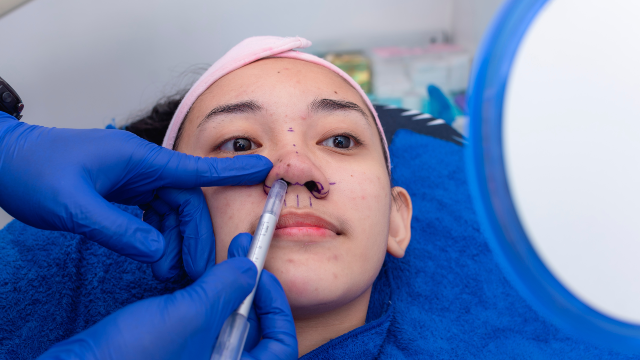
Tip plasty is rhinoplasty that focuses specifically on the lower third of the nose, where the tip is located. Rather than changing the height of the bridge or the width of the nasal bones, the surgeon works on the cartilage that gives the tip its shape and support. In some patients, tip work is performed on its own; in many others, it is one component of a full rhinoplasty that also addresses the bridge, the alae (nostril walls), or a deviated septum.
The nasal tip is a pyramid-like structure that projects forward from the plane of the face. Its shape is created largely by the paired lower lateral cartilages, sometimes called the alar cartilages. Each of these cartilages has a curved segment, and the two curves meet near the midline to form the "domes" that define the point of the tip. The relationships among these cartilages, the strength of the tissue holding them in place, and the thickness of the overlying skin all influence how the tip looks and how it responds to surgery.
Because so many small structures interact, small changes can have a visible effect, and thick or thin skin can either soften or reveal the underlying framework. This is why surgeons emphasize careful analysis and conservative, structurally sound techniques rather than simply "removing" cartilage.
Goals: Projection, Rotation, and Definition
Surgeons describe tip characteristics using a few key terms, and understanding them helps you communicate your goals clearly:
Projection is how far the tip extends forward from the face. A tip can be under-projected (flat) or over-projected (pointing too far forward).
Rotation describes the angle of the tip relative to the upper lip, often discussed as the nasolabial angle. A drooping tip is under-rotated; a tip that appears turned up is over-rotated.
Definition refers to how refined and distinct the tip looks. A bulbous or boxy tip lacks definition, often because of wide, rounded, or splayed lower lateral cartilages and thicker skin.
Tip plasty aims to bring these qualities into a more balanced relationship with the rest of the nose and face. Importantly, "balanced" is individual. There is no single ideal number that suits every face, and reputable surgeons plan around your existing features rather than a one-size-fits-all template. Results also vary from person to person, and no ethical surgeon can promise a specific outcome.
Who May Be a Candidate?
People commonly explore tip plasty when they are bothered by a tip that is bulbous or rounded, boxy or wide, drooping (especially noticeable when smiling), asymmetric, over- or under-projected, or lacking clear definition. Candidacy depends on more than appearance, though. A surgeon will assess your skin thickness, the strength and shape of your cartilage, your breathing, any history of prior nasal surgery or injury, and your general health.
Good candidates are typically in good overall health, do not smoke or are willing to stop during the healing period, and hold realistic expectations about what surgery can and cannot achieve. Skin thickness is a particularly important factor: thicker skin tends to hide fine changes in the cartilage and can limit how much definition is achievable, while very thin skin may reveal small irregularities. A thorough consultation with a board-certified plastic surgeon is essential to determine whether tip surgery is appropriate for you; you can learn about the reviewing surgeon's background on the Dr. Kiweon Ham profile page.
How Tip Plasty Is Performed
Open Versus Closed Approaches
Rhinoplasty, including tip surgery, can be performed through a closed (endonasal) approach, where all incisions are hidden inside the nostrils, or an open (external) approach, which adds a small incision across the columella, the strip of skin between the nostrils. The open approach gives the surgeon direct visualization of the tip cartilages and is often chosen for complex reshaping or grafting; the closed approach avoids the external incision. The choice depends on your anatomy, the complexity of the work planned, and the surgeon's judgment. When an external incision is used, it is placed to heal as inconspicuously as possible, though any incision leaves some scar.
Suture Techniques
Modern tip surgery relies heavily on suture techniques that reshape the existing cartilage rather than simply removing it. By placing fine, permanent sutures, the surgeon can narrow a wide dome, bring the two domes closer together, refine a boxy contour, and adjust projection and rotation. Commonly described suture maneuvers include transdomal sutures (which narrow each dome), interdomal sutures (which bring the domes together), lateral crural sutures, and columella-septal sutures that help set projection and rotation. These techniques allow controlled shaping while preserving structural support.
Cartilage Trimming and Grafting
In some cases the surgeon conservatively trims a portion of the cartilage, such as a small strip along the upper edge of the lower lateral cartilage (a cephalic trim), to refine a bulbous tip. Overly aggressive removal is avoided because it can weaken the tip and lead to collapse or an unnatural, pinched appearance over time.
Grafting is frequently used to add support, projection, or definition. A columellar strut graft placed between the cartilages can reinforce and stabilize tip projection, while a tip or shield graft can add definition and refinement. The cartilage for these grafts most often comes from the nasal septum. When septal cartilage is limited, the ear (auricular) cartilage or rib cartilage may be used instead. Gonggan Plastic Surgery documents the use of structural grafting materials including septal, ear, rib, and donor rib cartilage, as well as other structural grafting methods; the appropriate choice is individualized and discussed during consultation. No single material is inherently superior for every patient.
Combined Procedures
Because the tip does not exist in isolation, tip plasty is often combined with other steps for a harmonious result. It may be paired with dorsal (bridge) work, alar base reduction to narrow wide nostrils, or septal surgery to improve breathing. When several elements are addressed together, the plan is tailored to the whole nose rather than treating the tip in isolation.
Recovery and the Swelling Timeline
Recovery from tip surgery is a gradual process, and patience is essential. In the first week, expect swelling and some bruising, which is often concentrated around the tip and, in open approaches, the columella. A splint or tape may be applied to support the nose, and your surgeon will provide specific aftercare instructions. Many people feel comfortable returning to non-strenuous activities within one to two weeks, though this varies.
The tip is the slowest part of the nose to settle. Because the skin and soft tissue over the tip are relatively thick and hold swelling longer, the final refined shape can take many months to emerge, and full resolution of tip swelling may take a year or longer, particularly in patients with thicker skin. Early on, the tip can look firmer, rounder, or more swollen than the final result. Strenuous exercise, sun exposure, glasses resting on the nose, and other activities are usually restricted for a period defined by your surgeon. Following aftercare instructions closely supports the best possible healing.
Risks and Considerations
Tip plasty is surgery, and like all surgery it carries risks. A responsible discussion of nasal tip surgery includes the possibility of:
Bleeding and infection
Swelling and bruising that persist longer than expected
Asymmetry between the two sides of the tip
Over-correction or under-correction of projection, rotation, or definition
A pinched, overly narrow, or unnatural appearance if too much support is lost
Changes in nasal breathing
Altered skin sensation around the tip and columella
Visible or thickened scarring, including at the columellar incision in open approaches
Reactions or risks related to anesthesia
The possibility that a revision procedure may be needed to adjust the result
Revision surgery deserves particular mention. Even in experienced hands and with a well-executed operation, healing is a biological process that no one fully controls, and some patients ultimately choose or require a secondary procedure. This does not necessarily reflect an error; it reflects the reality that soft tissue and cartilage heal individually. A candid consultation should cover these possibilities honestly. General information about rhinoplasty risks is also available from professional and medical resources such as those listed at the end of this article.
Planning Your Consultation
A meaningful consultation goes beyond looking at photographs. Expect a discussion of your goals, an examination of your nasal skin and cartilage, an assessment of your breathing, and a review of your medical history. Because certain details—such as specific pricing, anesthesia protocols, and revision policies—depend on the individual case and the clinic, it is best to confirm these directly with the clinic rather than relying on general online figures. You can reach out through Gonggan Plastic Surgery to ask about the consultation process and how the surgical team approaches nasal tip surgery.
Frequently Asked Questions
What is the difference between tip plasty and full rhinoplasty?
Tip plasty focuses only on the lower third of the nose, reshaping the cartilage that forms the tip's projection, rotation, and definition. A full rhinoplasty may also address the bridge, the nasal bones, the nostrils, or the septum. Whether tip work alone is enough depends on your anatomy and goals, which a surgeon can assess during a consultation.
Will tip surgery leave a visible scar?
With a closed approach, incisions are hidden inside the nostrils and there is no external scar. With an open approach, a small incision is made across the columella and placed to heal as inconspicuously as possible. All incisions leave some scar tissue, and healing varies by individual, but external tip incisions are generally designed to be discreet.
How long until I see the final result?
Most visible swelling improves over the first several weeks, but the tip is the slowest area to settle. The final refined shape can take many months to appear, and complete resolution of tip swelling may take a year or longer, especially in people with thicker skin. Early appearance is not the final result.
Can tip surgery affect my breathing?
Tip surgery can change nasal airflow, and structural techniques aim to preserve or support the tip's framework so that breathing is not compromised. In some cases tip work is combined with septal surgery to improve breathing. Any concerns about nasal obstruction should be raised during your evaluation.
Is tip plasty suitable for thicker skin?
People with thicker skin can be candidates, but thicker skin holds swelling longer and can soften fine definition, so results may be more subtle and take longer to appear. A surgeon will discuss what is realistic for your specific skin type and cartilage during consultation. Expectations should be individualized.
Might I need a revision procedure?
It is possible. Healing is a biological process that no surgeon fully controls, and some patients choose or require a secondary procedure to adjust the result. This does not always indicate that anything went wrong; it reflects individual healing. Your surgeon should discuss this possibility honestly before surgery.
The Bottom Line
Nasal tip surgery, or tip plasty, reshapes the cartilage of the lower third of the nose to refine projection, rotation, and definition, and it can be done alone or as part of a full rhinoplasty.
Modern technique emphasizes suture reshaping and structural grafting over aggressive cartilage removal, using septal, ear, or rib cartilage when grafts are needed, with the choice individualized.
The tip is the slowest part of the nose to heal; final refinement can take a year or longer, and early swelling is normal, particularly with thicker skin.
Real risks include bleeding, infection, asymmetry, over- or under-correction, breathing changes, scarring, anesthesia risks, and the possibility of revision.
Candidacy and results are individual; a consultation with a board-certified plastic surgeon is the only way to learn what applies to you.
This article is for general education only. It reflects general information about nasal tip surgery and is not medical advice, a diagnosis, or a treatment recommendation for any individual. Surgical results vary from person to person, and no outcome can be guaranteed. This article is not a self-diagnosis tool. Always consult a qualified, board-certified plastic surgeon in person to discuss your specific anatomy, goals, and risks before making any decision about surgery.
More Articles
Continue reading our clinical guides.

Guide to Nose Surgery: Procedure Basics Explained
Guide to nose surgery: Discover procedure basics, preparation, recovery, and expected results. Learn what to expect and explore your options today.
Learn More

What to Know Before Eye Surgery
What to know before eye surgery: Learn about preparation, risks, recovery, and what to expect for a safer, more confident procedure. Read more today.
Learn More
Revision Rhinoplasty in South Korea: US Patient Guide
A practical guide to revision rhinoplasty in South Korea for US patients: why second nose surgery is more complex, cartilage graft realities, and risks.
Learn More