17+ Years of Personalized Eye, Nose & Lifting Plastic Surgery in Gangnam, Seoul

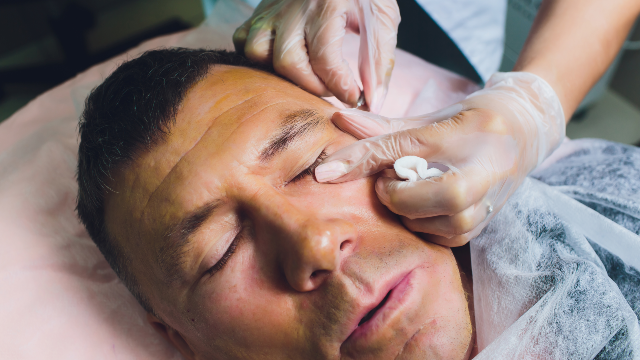
Medical Guide
Natural Double Eyelid Surgery for Men: What to Know
A guide to natural double eyelid surgery for men in Korea: how eyelid anatomy, technique options, and realistic risks shape a subtle, personalized result.
Schedule a ConsultationNatural Double Eyelid Surgery for Men: What to Know
Medically reviewed by Dr. Kiweon Ham, Board-Certified Plastic Surgeon in South Korea, Chief Director, Gong Gan Plastic Surgery
More men are asking about double eyelid surgery, a procedure that creates or refines a crease in the upper eyelid. If you are researching this operation, you have probably seen the word "natural" attached to it again and again. It is worth being clear about what that word means. A natural-looking result is not about making an eyelid look more or less masculine, and it is not a value judgment about any particular crease. It simply describes a common patient preference: a subtle, understated fold that suits a person's own face, rather than a dramatic or obviously operated appearance. Whether that preference is the right one for you is an individual decision, and the answer depends far more on your anatomy and your goals than on any general rule.
This article explains how surgeons think about male eyelid anatomy, what the main technique options are, and the realistic risks and recovery that come with any eyelid surgery. Because every eyelid is different, none of this replaces a personal assessment. To ask about your own case, you can reach the team through the Gong Gan Plastic Surgery website or review the credentials of Dr. Kiweon Ham.
What double eyelid surgery does
Double eyelid surgery, a form of upper blepharoplasty, creates a defined crease in the upper eyelid where one is absent, faint, or uneven. In eyelids without a visible fold, the skin runs smoothly from the lash line up toward the brow. Surgery establishes a point of attachment so that the skin folds inward when the eye opens, producing a crease. Depending on the plan, the same operation may also address excess skin or a small amount of fat.
It is a cosmetic procedure, so there is no single "correct" outcome. The goal is agreed on between patient and surgeon during the consultation. Some people want a crease that is barely noticeable; others want it more defined. What matters is that the plan reflects your preference and what your tissues can realistically support.
What "natural" means here
When a result is described as natural, it usually means the crease looks like it belongs to the person's face and does not draw attention to itself. That preference is common among many patients, including men, but it is a preference rather than a medical requirement. Framing a subtle crease as "correct" for one group of people and a defined crease as "correct" for another oversimplifies a decision that is really about individual taste and individual anatomy.
Rather than starting from assumptions, a careful consultation starts from your eyelids and your goals. Photographs, measurements of crease height, and a discussion of what you want to see in the mirror all feed into a plan. The same technique can be dialed toward a lower, softer fold or a higher, more open one, so the conversation about "how natural" or "how defined" is one you should expect to have directly with your surgeon.
How eyelid anatomy guides the approach
Anatomy, not aesthetic labels, drives most technical decisions. A few features tend to matter most:
Skin thickness. Thicker eyelid skin holds a crease differently than thin skin and can influence which technique is more likely to give a lasting result.
Fat and fullness. A fuller upper eyelid may sit lower over the lash line. Managing that fullness can change how visible a crease appears.
Skin quantity and laxity. Extra or loose skin may need to be addressed for a crease to show cleanly.
Existing crease height and symmetry. Where a faint fold already sits, and whether the two sides match, shapes where a new crease is placed.
Eyelid position and levator function. If the eyelid margin sits low (ptosis), that is a separate issue that a surgeon evaluates on its own terms.
Because these features vary widely from person to person, two people asking for the "same" result may need different plans. This is why a template approach is a poor fit for eyelid surgery and why individualized assessment matters.
Technique options
There are several ways to create a crease. None is universally "best"; each has trade-offs, and the right choice depends on your anatomy and goals. Your surgeon should explain why a particular method is being recommended for you.
Non-incisional (buried suture) method
The non-incisional approach uses sutures placed through small openings rather than a continuous cut along the eyelid. It can appeal to people who want a shorter recovery and no long incision line. It tends to suit eyelids with thinner skin and limited excess skin or fat. Because there is no removal of tissue, it is generally not the tool for eyelids with significant extra skin, and a crease made this way can, in some cases, fade or loosen over time.
Partial-incision method
A partial-incision technique uses one or more small incisions rather than a full-length cut. It sits between the non-incisional and full-incision methods and can allow limited removal of fat or a small amount of skin while keeping the incision shorter. It may be considered when a purely suture-based approach is unlikely to hold or when a modest amount of tissue needs to be addressed.
Incisional (full-incision) method
The incisional method uses a continuous incision along the planned crease line. It allows the most control over excess skin and fat and is often chosen when there is more skin to remove or when a very stable crease is the priority. The trade-off is a longer incision, typically a somewhat longer recovery, and a scar that matures over time. In experienced hands the incision is placed within the crease so that it is concealed when the eye is open.
Realistic risks and recovery
Every surgical procedure carries risk, and eyelid surgery is no exception. Being realistic about this is part of making an informed choice. General risks discussed with eyelid surgery include swelling and bruising, bleeding, infection, and scarring. More specific concerns can include crease asymmetry between the two sides, a crease that is set higher or lower than intended, a crease that fades or partly loses definition, temporary or, rarely, longer-lasting difficulty fully closing the eye, and dry-eye symptoms. Because the two eyelids are separate structures, perfect symmetry cannot be promised, and some patients need a touch-up or revision.
Recovery varies with the technique and the individual. Swelling and bruising are common in the early days and settle gradually, and the final appearance of a crease continues to refine over weeks to months as tissues heal. Surgeons commonly advise rest, head elevation, cold compresses as directed, and avoiding strenuous activity for a period. You should follow the specific aftercare instructions your surgeon gives you rather than generic timelines, and you should ask what to do and whom to contact if something does not look or feel right.
No ethical surgeon can guarantee a specific result. Realistic expectations, set during a thorough consultation, are one of the most important predictors of satisfaction.
Planning an individualized consultation
A good consultation is a two-way conversation. Bring reference photos if you have them, and be ready to describe not just the look you want but also the look you want to avoid. Expect the surgeon to examine your eyelids, discuss your skin type and any asymmetry, and explain which technique fits your anatomy and why. This is also the moment to ask about the surgeon's qualifications, the facility, anesthesia, aftercare, and how revisions are handled.
If you are traveling from abroad, planning matters even more, because your recovery and any follow-up need to be arranged in advance. You can start a conversation or ask logistical questions through the Gong Gan Plastic Surgery contact page. For any point that is not published, such as specific scheduling or aftercare details, confirm it directly with the clinic in writing before you commit.
Frequently Asked Questions
Is double eyelid surgery different for men?
The underlying operation is the same, but the plan is individualized to each person's anatomy and preferences. Differences in skin thickness, eyelid fullness, and desired crease height are addressed on a case-by-case basis rather than by a fixed rule for any group. Your surgeon should tailor the approach to your eyelids and goals.
Will a "natural" result look less masculine?
A natural result simply means a subtle crease that suits your face and does not look obviously operated. It is a matter of personal preference, not of masculinity or femininity. During your consultation you can discuss exactly how subtle or defined you would like the crease to be.
How long do the results last?
Incisional techniques tend to produce a more stable, long-lasting crease, while suture-based methods can, in some cases, fade or loosen over time. Longevity depends on your anatomy and the technique used. Your surgeon can give you a realistic sense of what to expect for your situation.
Is the procedure painful?
Eyelid surgery is typically performed with local anesthesia and sedation or general anesthesia, and discomfort is usually described as manageable. Swelling and bruising in the first days are more common complaints than pain. Follow your surgeon's guidance on pain control and aftercare.
What are the most common complications?
Reported concerns include swelling, bruising, bleeding, infection, scarring, crease asymmetry, a crease that is too high or too low, fading of the crease, dry-eye symptoms, and, rarely, difficulty fully closing the eye. Many issues are temporary, but some may need a revision. A thorough consultation and honest expectations reduce disappointment.
Can the surgery be revised if I am unhappy?
Revision is sometimes possible, but it is generally more complex than a first operation and cannot guarantee a perfect outcome. This is one reason careful planning up front matters so much. Ask any surgeon how they approach revisions before you proceed.
How do I choose a qualified surgeon?
Look for a surgeon whose specialty training and board status you can verify, ask about the facility and who will perform your operation, and make sure you feel your questions are answered. Reviewing a surgeon's documented background, such as the profile of Dr. Kiweon Ham, is a reasonable starting point. Confirm anything not published directly with the clinic.
The Bottom Line
Double eyelid surgery creates or refines an upper-eyelid crease, and a "natural" result reflects a common patient preference for a subtle fold rather than any statement about gender.
Technique choice, non-incisional, partial-incision, or incisional, is driven by your eyelid anatomy and goals, not by a one-size-fits-all rule.
All eyelid surgery carries real risks, including swelling, bruising, infection, scarring, asymmetry, and fading of the crease, and perfect symmetry cannot be promised.
Revision is sometimes possible but more complex than a first operation, so realistic expectations and careful planning matter.
An individualized consultation is essential; confirm any detail not published directly with the clinic.
This article is for general education only. It is not medical advice, it is not a self-diagnosis tool, and it cannot replace a personal evaluation by a qualified surgeon. Surgical results vary from person to person, and no outcome can be guaranteed. Always discuss your specific situation, risks, and options with a licensed medical professional before making any decision.
More Articles
Continue reading our clinical guides.

Guide to Nose Surgery: Procedure Basics Explained
Guide to nose surgery: Discover procedure basics, preparation, recovery, and expected results. Learn what to expect and explore your options today.
Learn More

What to Know Before Eye Surgery
What to know before eye surgery: Learn about preparation, risks, recovery, and what to expect for a safer, more confident procedure. Read more today.
Learn More
Revision Rhinoplasty in South Korea: US Patient Guide
A practical guide to revision rhinoplasty in South Korea for US patients: why second nose surgery is more complex, cartilage graft realities, and risks.
Learn More