17+ Years of Personalized Eye, Nose & Lifting Plastic Surgery in Gangnam, Seoul

Medical Guide
Thread Lift vs. Mini Facelift vs. Full Facelift Compared
Compare thread lifts, SMAS mini facelifts, and full facelifts by invasiveness, downtime, and how long results last, with guidance from a Gangnam surgeon.
Schedule a ConsultationThread Lift vs. Mini Facelift vs. Full Facelift Compared
Medically reviewed by Dr. Kiweon Ham, Board-Certified Plastic Surgeon in South Korea, Chief Director, Gonggan Plastic Surgery
When facial skin and deeper tissue begin to descend with age, patients often ask which "lift" is right for them. The three options most commonly discussed sit on a ladder of increasing intervention: a thread lift, a SMAS mini facelift, and a full facelift. They are not interchangeable, and they do not produce the same results. Understanding where each sits on that ladder, and being honest about the trade-offs, is the first step toward a decision that fits your anatomy and your goals rather than a marketing slogan.
This article compares the three approaches in an even-handed way. One point deserves emphasis at the outset: a thread lift is not the equivalent of a surgical facelift. It is a distinct, less invasive procedure that repositions tissue with absorbable sutures, and its effect is more modest and more temporary. A SMAS mini facelift and a full facelift are genuine surgical facelifts. Keeping that distinction clear helps you set realistic expectations. At Gonggan Plastic Surgery in Gangnam-gu, Seoul, these procedures are among the facial lifting options discussed during an in-person assessment.
Understanding the Lifting Ladder
The face ages in layers. Skin loses elasticity, fat pads shift and deflate, and the deeper connective-tissue layer that supports the cheeks and jawline gradually relaxes. Different procedures act on different layers, which is why they cannot be ranked by a single number. A thread lift works largely at the level of the soft tissue and skin envelope. A mini facelift and a full facelift address the superficial musculoaponeurotic system, or SMAS, the fibrous layer that surgeons reposition to create lasting support.
Because these procedures target different depths, the right choice depends on how much laxity is present, where it is concentrated, the quality of your skin, and how much recovery time you are prepared to accept. No single option is "best" for everyone. The comparison below is meant to help you frame the conversation you will have with a board-certified surgeon.
Thread Lift: The Least Invasive Option
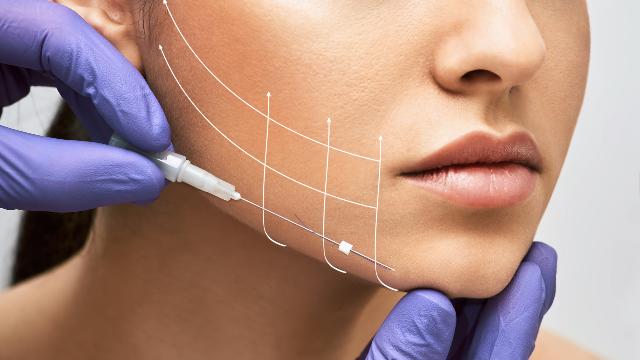
A thread lift uses absorbable lifting threads to elevate sagging facial tissue. The threads are placed beneath the skin along planned vectors, and small barbs or cones along each thread catch the tissue and reposition it upward. Because the procedure typically avoids large incisions, it is the least invasive of the three approaches and generally involves the shortest downtime.
How a Thread Lift Works
Threads are introduced through tiny entry points, often with local anesthesia. Once positioned, they provide immediate mechanical support and, over time, the body gradually absorbs the material. Many patients are drawn to a thread lift because the visible recovery is usually brief compared with surgery. It can suit a person with mild, early sagging who wants a subtle adjustment and is not ready for an operation.
What a Thread Lift Can and Cannot Do
The honest limitation is durability and scale of change. A thread lift produces a modest lift, and its effect is the most temporary of the three procedures because the threads are absorbable and the underlying laxity continues to progress. It does not remove excess skin, it does not reposition the SMAS layer the way surgery does, and it should not be described as a facelift. Anyone claiming a thread lift matches surgical longevity is overstating it. Results vary from person to person, and repeat treatments may be needed to maintain an effect. Gonggan Plastic Surgery presents thread lifting in generic terms, without brand names or device claims, so ask your surgeon to explain the specific technique and materials proposed for you.
SMAS Mini Facelift: A Surgical Middle Ground
A SMAS mini facelift is a genuine surgical facelift performed through a shorter, more limited incision than a full procedure. Rather than only tightening skin, it addresses the SMAS layer, tightening and repositioning that deeper support so the result is more durable than a thread lift can offer. It is often discussed for patients with early to moderate sagging concentrated around the lower cheeks and jawline who want a meaningful surgical improvement with a somewhat shorter recovery than a full facelift.
Because it is surgery, a mini facelift involves incisions, typically placed around the ear where scars can be concealed, and it carries genuine surgical risks. The trade-off is that it addresses less territory than a full facelift. If laxity extends into the neck or the mid- and lower face together, a limited approach may not be enough, and attempting to stretch a mini procedure to do a full procedure's job can lead to disappointment. The result is not permanent, because aging continues, but it is more comprehensive and longer-lasting than what threads provide.
Full Facelift: The Most Comprehensive Option
A full facelift, known medically as rhytidectomy, is the most comprehensive of the three. According to the American Society of Plastic Surgeons, a traditional facelift incision often begins in the hairline at the temples, continues around the ear, and ends in the lower scalp, while fat may be sculpted or redistributed and the underlying tissue repositioned before excess skin is removed. Surgeons frequently work at the SMAS level to resuspend the descended tissues of the cheeks, jawline, and neck.
Because it addresses more of the face and often the neck, a full facelift generally offers the most complete correction and the longest-lasting result of the three. It also involves the longest recovery and the most extensive surgery. It is often combined with other procedures, such as a brow lift or eyelid surgery, for broader rejuvenation, and careful patient selection is an important part of a successful outcome. As with any surgical lift, the result is not permanent; it resets the clock rather than stopping it.
Comparing the Three: Invasiveness, Downtime, and Longevity
Placed side by side, the pattern is consistent. Invasiveness increases from thread lift to mini facelift to full facelift. Downtime tends to follow the same order, with a thread lift usually the quickest to recover from and a full facelift the longest. Longevity moves in the same direction: a thread lift is the most temporary, a mini facelift more durable, and a full facelift generally the longest-lasting, though none is permanent because the face continues to age.
The amount of change also scales up the ladder. A thread lift offers a modest refinement, a mini facelift a moderate surgical improvement over a limited area, and a full facelift the most comprehensive correction. This is why matching the procedure to the degree of sagging matters more than choosing the option with the shortest recovery. Choosing too small a procedure for significant laxity leads to an underwhelming result; choosing surgery for very mild changes may be more than the situation calls for. Individual outcomes vary, and no result is guaranteed.
How Candidacy Is Decided
Candidacy is an individualized judgment made during a consultation, not something that can be settled from photographs online. A surgeon assesses the degree and location of skin and tissue laxity, skin thickness and elasticity, facial fat distribution, bone structure, and your general health. Your goals and your tolerance for downtime are equally important inputs. Someone with early, isolated sagging and little appetite for surgery may reasonably consider a thread lift, while someone with moderate jawline descent may be better served by a mini facelift, and someone with widespread laxity of the face and neck by a full facelift.
A responsible plan sometimes combines approaches over time or pairs a lift with volume restoration, such as fat grafting, when deflation rather than only descent is part of the picture. The clinic's Chief Director, Dr. Kiweon Ham, whose documented specializations include face lift surgery, mini facelift, endoscopic forehead lift, thread lifting, and fat grafting, evaluates these factors on a case-by-case basis. The point of the consultation is to match the intervention to your anatomy honestly, rather than to fit you to a single procedure.
Risks to Understand Before Choosing
Every option on this ladder carries risk, and surgery carries more. For a thread lift, possible issues include bruising, swelling, discomfort, asymmetry, visible or palpable threads, dimpling of the skin, and infection, along with the reality that the effect fades. For a mini facelift and a full facelift, recognized surgical risks include bleeding and hematoma, infection, scarring, asymmetry, and temporary or, less commonly, longer-lasting changes in sensation. Injury to the facial nerve, which controls movement of the face, is an uncommon but serious potential complication of facelift surgery. Sutures may occasionally surface through the skin or cause irritation.
Anesthesia carries its own risks, and results can fall short of expectations, sometimes prompting revision. These are not reasons to avoid treatment, but they are reasons to have a candid conversation, to sign a consent form only after your questions are answered, and to weigh the potential benefits against the potential complications. A board-certified plastic surgeon should discuss all of these with you before you decide.
Frequently Asked Questions
Is a thread lift the same as a facelift?
No. A thread lift uses absorbable sutures to reposition tissue and is the least invasive option, producing a modest and more temporary result. A SMAS mini facelift and a full facelift are surgical procedures that reposition the deeper SMAS layer for a more durable outcome. Calling a thread lift a facelift is inaccurate.
How long do the results last?
Longevity increases up the ladder, but none of the options is permanent because the face keeps aging. A thread lift is the most temporary, a mini facelift lasts longer, and a full facelift generally offers the longest-lasting correction. Individual results vary depending on skin quality, lifestyle, and how the tissues age.
Which option has the shortest recovery?
A thread lift usually involves the least downtime, followed by a mini facelift, with a full facelift requiring the most recovery time. Actual recovery depends on the individual, the extent of the procedure, and general health. Your surgeon can give you a realistic timeline for your specific plan.
Can these procedures be combined?
Sometimes. A lift may be paired with volume restoration such as fat grafting when deflation is part of the aging picture, and a full facelift is often combined with a brow lift or eyelid surgery. Whether combining procedures is appropriate is an individualized decision made during consultation. There is no one-size-fits-all package.
How do I know which one is right for me?
That is determined during an in-person assessment that considers the degree and location of laxity, skin quality, facial structure, your goals, and your tolerance for downtime. No single option is best for everyone. A board-certified plastic surgeon can explain the trade-offs and recommend an approach suited to your anatomy.
Are the results guaranteed?
No reputable surgeon guarantees a specific result, because outcomes vary from person to person and the face continues to change with time. The goal is a natural improvement appropriate to your anatomy, not a fixed promise. Understanding the realistic range of outcomes is part of informed consent.
The Bottom Line
The three options form a ladder: thread lift (least invasive, most temporary, modest change), SMAS mini facelift (surgical, moderate), and full facelift (surgical, most comprehensive and longest-lasting).
A thread lift is not a facelift. It uses absorbable sutures for a modest, shorter-lived lift and should not be described as equivalent to surgery.
Invasiveness, downtime, and longevity all increase from thread lift to mini facelift to full facelift; none is permanent because aging continues.
Every option carries real risks, and surgery carries more, including bleeding, infection, scarring, asymmetry, and, uncommonly, nerve injury.
The right choice is individualized and best decided in a consultation with a board-certified plastic surgeon who matches the procedure to your anatomy and goals.
This article is for general education only. It describes procedures in general terms and cannot account for your individual anatomy, health, or goals. Surgical results vary from person to person, and no outcome is guaranteed. Nothing here is medical advice, a treatment recommendation, or a substitute for an in-person evaluation, and it is not a self-diagnosis tool. Always consult a qualified, board-certified plastic surgeon about your specific situation.
More Articles
Continue reading our clinical guides.

Guide to Nose Surgery: Procedure Basics Explained
Guide to nose surgery: Discover procedure basics, preparation, recovery, and expected results. Learn what to expect and explore your options today.
Learn More

What to Know Before Eye Surgery
What to know before eye surgery: Learn about preparation, risks, recovery, and what to expect for a safer, more confident procedure. Read more today.
Learn More
Revision Rhinoplasty in South Korea: US Patient Guide
A practical guide to revision rhinoplasty in South Korea for US patients: why second nose surgery is more complex, cartilage graft realities, and risks.
Learn More