17+ Years of Personalized Eye, Nose & Lifting Plastic Surgery in Gangnam, Seoul


Eye Surgery
Lower Eyelid Fat Repositioning
Lower eyelid fat repositioning is a surgical procedure that addresses bulging, uneven or displaced fat beneath the lower eyelid to create a smoother, brighter and more refreshed under-eye appearance.
Schedule a ConsultationWhat Is Lower Eyelid Fat Repositioning and How Does It Brighten the Under-Eye?

Lower eyelid fat repositioning — also referred to as lower blepharoplasty or eye bag surgery — is a surgical procedure that addresses bulging, uneven, or displaced fat beneath the lower eyelid to create a smoother, brighter, and more refreshed under-eye appearance. Unlike simple fat removal, fat repositioning takes a more nuanced approach: excess fat is partially removed where it bulges, and the remaining fat is redistributed to areas beneath that lack volume, eliminating both the protrusion and the shadowing or hollowing that often accompanies it.
The under-eye area is one of the most visually sensitive regions of the face. Changes here have a disproportionate effect on how rested, youthful, or approachable a person appears. At Gong Gan Plastic Surgery, lower eyelid fat repositioning is approached with age, gender, symptom severity, and individual anatomy all factored into the diagnosis and surgical design. The goal is to preserve the features that contribute positively to the patient's appearance — including the natural lower eyelid volume known as aegyo-sal — while correcting only the elements causing the dark, tired, or puffy impression.
Who Is a Candidate for Under-Eye Fat Repositioning?
Lower eyelid fat repositioning suits patients who are bothered by bulging, uneven, or shadowed under-eye areas and wish to achieve a brighter and more refreshed appearance. Candidacy is confirmed through detailed clinical evaluation.
Ideal candidates include:
- Individuals in their 20s–50s with visible under-eye fat bulging that creates a tired, aged, or puffy appearance
- Those with uneven fat distribution beneath the lower eyelid causing an irregular or shadowed under-eye contour
- Patients with a dark or dull under-eye impression resulting from the shadow cast by protruding fat pads
- Those who want to address eye bags without visible external scarring
- Individuals who wish to preserve their aegyo-sal while correcting only the problematic fat excess above it
- Patients whose under-eye area appears both puffy in some areas and hollow in others, requiring redistribution rather than simple removal
- Those who have noticed the under-eye fat worsening over time and want a structural, long-lasting solution
- Patients in good general health with realistic expectations about the improvement achievable through fat repositioning
Meet Dr. Kiweon Ham — Lower Eyelid and Under-Eye Surgery Specialist

Dr. Kiweon Ham Plastic Surgery Specialist, M.D.
Gong Gan Plastic Surgery is led by Representative Director Dr. Kiweon Ham, a board-certified plastic surgeon with 17 years of clinical experience and one of the most comprehensive facial surgery training backgrounds in Korea.
Dr. Ham completed his medical degree at Yonsei University College of Medicine and his plastic surgery residency at Severance Hospital. He undertook advanced fellowships at the University of California San Diego Medical Center (UCSD) and the University of Pittsburgh Medical Center (UPMC) before returning to Severance as a Former Clinical Instructor. Gong Gan operates as an official partner clinic of Yonsei University Severance Hospital.
He holds Life Membership and serves on the Academic Committee of KSPRS, presenting regularly at international conferences, and is a full member of KSAPS, KCPCA, and IPRAS.
Lower eyelid surgery demands a particularly careful and individualized approach because the under-eye area varies significantly between patients — in fat volume, distribution, skin quality, and the presence or absence of aegyo-sal. Dr. Ham's philosophy is to preserve what works and correct only what doesn't: a principle of targeted improvement rather than blanket removal that respects each patient's natural facial character.
[Book a Consultation with Dr. Kiweon Ham]
Lower Eyelid Fat Repositioning: Technique and Approach at Gong Gan
Aegyo-sal Preservation
The small, naturally rounded volume along the lower eyelid margin — known as aegyo-sal — contributes a youthful and approachable quality to the eye. At Gong Gan, preserving this feature is a deliberate part of the surgical design. Rather than removing all lower eyelid fat indiscriminately, Dr. Ham identifies and protects the aegyo-sal volume while addressing the fat above it that is causing the unwanted bulging or shadowing. This distinction between what to preserve and what to correct is central to achieving a natural, refreshed result rather than an over-operated appearance.
Conjunctival Micro-Incision — No External Scarring
The entire procedure is performed through a micro-incision made inside the lower eyelid at the conjunctiva — the inner lining of the eyelid. Because the incision is placed entirely within the eye, there is no visible external scar on the lower eyelid skin. This transconjunctival approach significantly reduces scar-related concerns for patients and supports faster surface recovery, while still providing full surgical access to the under-eye fat compartments for thorough repositioning.
Balanced Fat Removal and Redistribution
The under-eye fat is not simply removed — it is carefully redistributed. Excess fat in the bulging areas is partially excised, and the remaining fat tissue is repositioned evenly into the adjacent areas where volume is lacking, smoothing the transition between the lower eyelid and the cheek. This redistribution addresses both the protrusion and the shadowing or hollowing beneath it, producing a more uniform and naturally contoured under-eye zone.
Orbital Septum Tightening and Recurrence Prevention
The orbital septum — a thin membrane that encloses the under-eye fat compartments — is a critical structural element in lower eyelid fat repositioning. After fat removal and redistribution, Dr. Ham pulls the orbital septum firmly and fixes it in position, restoring its structural integrity and providing a stable barrier that prevents the fat from re-protruding over time. This step is essential for the longevity of the result and distinguishes a structurally thorough approach from one that addresses only the surface appearance.
Individual results vary depending on fat volume, skin elasticity, age, and healing response. Realistic expectations are discussed fully during pre-operative consultation.
The Lower Eyelid Fat Repositioning Process at Gong Gan
Under-Eye Diagnosis and Surgical Design
The consultation begins with a thorough assessment of the patient's under-eye condition — fat distribution, volume imbalance, aegyo-sal presence, skin quality, and shadow pattern. The planned repositioning is individually designed: the location, amount, and direction of fat redistribution are mapped out before surgery based on the specific findings of each patient's assessment.
Conjunctival Micro-Incision
The procedure begins with a micro-incision placed inside the lower eyelid conjunctiva. This internal access point eliminates the risk of visible external scarring, allowing the entire correction to proceed with no marks on the lower eyelid skin surface.
Fat Removal and Redistribution
Excess fat is partially removed from the bulging areas, and the remaining fat tissue is carefully and evenly redistributed to the adjacent hollowed or volume-deficient zones. This step addresses both the protrusion and the under-eye shadow simultaneously, creating a smoother, brighter under-eye contour.
Orbital Septum Restoration
The orbital septum is pulled taut and firmly fixed to restore structural integrity to the lower eyelid fat compartment. This fixation step prevents future fat re-protrusion and supports a durable, long-lasting result.
Recovery and Follow-Up
Mild swelling and bruising following lower eyelid fat repositioning are expected and typically resolve within one to two weeks. A dedicated post-operative management program supports recovery, and Dr. Ham personally oversees all follow-up appointments to monitor the under-eye contour as swelling resolves and the final result emerges.
Results, Safety, and Longevity
 |
 |
 |
 |
|---|
Lower eyelid fat repositioning at Gong Gan produces a naturally brightened under-eye appearance by addressing both excess and deficiency in the fat distribution — not simply removing tissue. Orbital septum fixation provides structural longevity by preventing recurrence of the fat bulge. The transconjunctival approach eliminates external scarring, and the preservation of aegyo-sal ensures the result looks refreshed rather than hollowed or over-corrected.
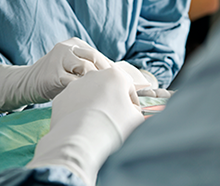
All procedures are backed by hospital-grade safety systems: OR CCTV monitoring confirming Dr. Ham performs every surgery personally, and multi-stage sterilization protocols exceeding standard guidelines. Tissue dissection is performed carefully to avoid damage to the orbital septum, blood vessels, and surrounding structures throughout the procedure.
As with any surgical procedure, lower eyelid fat repositioning carries risks including temporary swelling, bruising, and a low infection risk. Asymmetry during healing is common and typically resolves as swelling subsides. Serious complications are rare but possible and discussed openly before surgery.
Why Choose Gong Gan Plastic Surgery for Lower Eyelid Fat Repositioning?
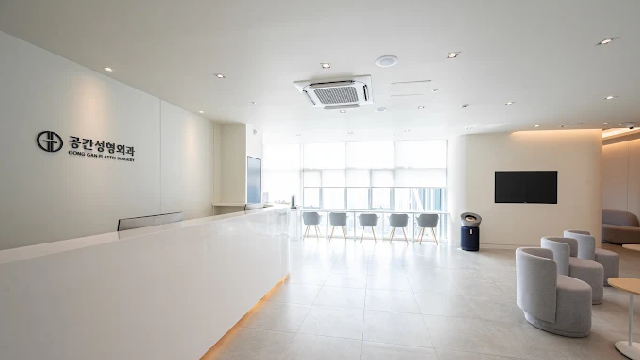
As an official partner clinic of Yonsei University Severance Hospital, Gong Gan combines diagnostic precision with a dedicated boutique practice model ideally suited to the nuanced demands of lower eyelid surgery. Dr. Ham's 17 years of experience and UCSD and UPMC fellowship training bring both depth and international perspective to every under-eye case, and his all-in-one care model ensures complete continuity from assessment through recovery.
- Preserve and Correct — Aegyo-sal and other positive lower eyelid features are preserved by design; correction targets only the problematic fat, not the entire under-eye volume
- No External Scarring — Transconjunctival micro-incision approach means the entire procedure leaves no visible marks on the lower eyelid skin
- Structural Longevity — Orbital septum tightening and fixation prevents fat re-protrusion, supporting durable results beyond the initial correction
Patient Experiences
Under-Eye Fat Repositioning Patient, 30s
This patient had prominent under-eye bags that made her appear consistently tired regardless of how rested she felt. Following consultation, Dr. Ham performed transconjunctival fat repositioning — removing excess fat from the bulging areas and redistributing it to the hollow beneath. At follow-up, she noted a significantly brighter under-eye with no visible scarring and a natural contour that preserved her aegyo-sal.
Lower Blepharoplasty Patient, 40s
A patient with both bulging fat pads and a shadowed hollow beneath them underwent fat repositioning with orbital septum repair at Gong Gan. Dr. Ham redistributed the fat evenly and tightened the septum for structural support. The patient reported a comfortable recovery and noted at follow-up that the result looked natural and refreshed — without the hollowed appearance he had feared.
Ready for Brighter, Refreshed Under-Eyes Without External Scarring?
If under-eye bags, uneven fat distribution, or a dark and tired under-eye appearance is affecting your confidence, lower eyelid fat repositioning at Gong Gan Plastic Surgery offers a precise, individually designed solution. Dr. Kiweon Ham combines 17 years of expertise, Severance Hospital training, UCSD and UPMC fellowships, and KSPRS Academic Committee membership to deliver lower blepharoplasty built on structural accuracy, tissue preservation, and genuine patient understanding. Every stage is managed directly by Dr. Ham.
[Book Your Lower Eyelid Fat Repositioning Consultation at Gong Gan Plastic Surgery]
Other Services
Explore additional treatments offered by our specialists.

Fat Grafting
Fat grafting is a procedure that harvests the patient's own fat from a donor area, purifies it, and reintroduces it into specific facial zones to restore volume, improve contour, and create a more three-dimensional, naturally youthful facial appearance.
Learn More

Men's Eye Surgery
Men's eye surgery — encompassing male double eyelid surgery, ptosis correction, and eyelid refinement — requires a fundamentally different approach from female blepharoplasty.
Learn More

Implant-Free Rhinoplasty
Implant-free rhinoplasty is a surgical approach that reshapes and refines the nose entirely using the patient's own autologous tissue — with no artificial implants of any kind.
Learn More