17+ Years of Personalized Eye, Nose & Lifting Plastic Surgery in Gangnam, Seoul


Middle-aged Eye Surgery
Upper Blepharoplasty
Upper blepharoplasty is a surgical procedure that corrects sagging, hooded, or heavy upper eyelids by removing excess skin, fat, and addressing the underlying muscle structure along the eyelid crease.
Schedule a ConsultationWhat Is Upper Blepharoplasty and How Does It Rejuvenate the Upper Eyelid?

Upper blepharoplasty — commonly referred to as droopy eyelid surgery or upper eyelid lift — is a surgical procedure that corrects sagging, hooded, or heavy upper eyelids by removing excess skin, fat, and addressing the underlying muscle structure along the eyelid crease. It is one of the most frequently performed procedures for middle-aged patients seeking to restore a more youthful, open, and refreshed eye appearance, and when performed correctly, it delivers both aesthetic and functional benefits simultaneously.
The key distinction of upper blepharoplasty at Gong Gan Plastic Surgery is that it goes beyond simple skin removal. Sagging eyelids are caused not just by excess skin but by a combination of stretched muscle, displaced fat, and weakened structural support. Addressing only the skin produces a surface improvement that may gradually recur. Dr. Kiweon Ham's approach corrects all three contributing factors — sagging skin excision, eyelid fat removal, and orbicularis oculi muscle correction — to address the root cause of the drooping and produce a naturally rejuvenated result with reduced risk of recurrence.
Upper Blepharoplasty vs. Brow Ptosis Repair — Which Is Right for You?
Both upper blepharoplasty and brow ptosis repair (eyebrow lowering lift) are surgical approaches to drooping eyelids, but they differ in where the incision is placed and which anatomical structure is primarily corrected. Upper blepharoplasty incises directly along the eyelid crease to remove sagging eyelid skin and tissue. Brow ptosis repair incises below the eyebrow and lifts the drooping lid upward by repositioning the brow-to-eyelid relationship.
Selecting the appropriate procedure requires a multi-factor assessment: the distance between the eye and the eyebrow, skin thickness and elasticity, muscle condition, and the degree and location of the sagging. Dr. Ham evaluates all of these factors individually during consultation to recommend the approach — or combination of approaches — that is genuinely most suitable for each patient's anatomy and concerns.
Who Is a Candidate for Upper Blepharoplasty?
Upper blepharoplasty is suitable for patients whose upper eyelid skin has become noticeably heavy, hooded, or drooping and who wish to restore a more open, youthful, and natural eyelid appearance. Candidacy is confirmed through detailed clinical evaluation.
Ideal candidates include:
- Individuals in their 40s–60s with excess upper eyelid skin that creates a heavy, tired, or aged impression
- Those whose drooping eyelid skin has begun to obscure part of their field of vision or cause functional discomfort
- Patients whose eyelashes are being irritated or pushed downward by overhanging eyelid skin
- Those who habitually raise their eyebrows or forehead to compensate for a drooping upper eyelid, resulting in forehead lines
- Individuals who want a naturally refreshed eye appearance without an overdone or surgically obvious result
- Those who have been assessed and confirmed as better suited to eyelid crease incision than brow-level correction
- Patients whose drooping is caused by a combination of excess skin, displaced fat, and weakened orbicularis oculi muscle requiring a comprehensive correction
- Those in good general health with realistic expectations about the degree of rejuvenation achievable
Meet Dr. Kiweon Ham — Upper Blepharoplasty Specialist at Gong Gan Plastic Surgery
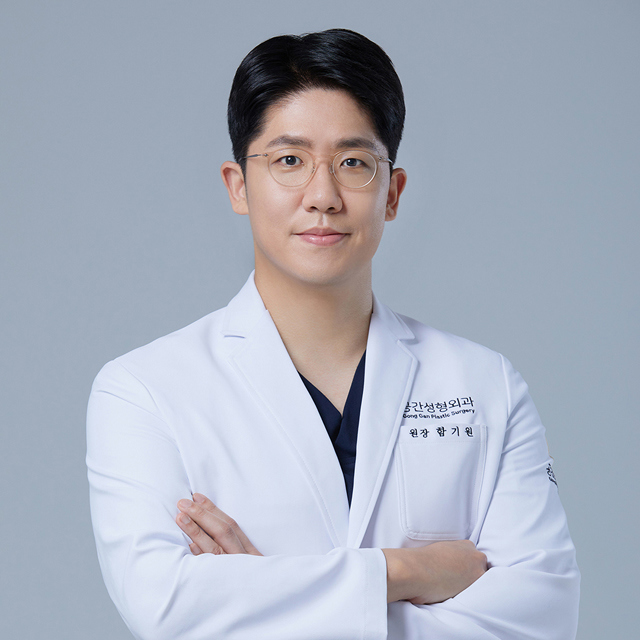
Dr. Kiweon Ham Plastic Surgery Specialist, M.D.
Gong Gan Plastic Surgery is led by Representative Director Dr. Kiweon Ham, a board-certified plastic surgeon with 17 years of clinical experience and a training background spanning Korea's most prestigious medical institutions and leading international surgical centers.
Dr. Ham completed his medical degree at Yonsei University College of Medicine and his plastic surgery residency at Severance Hospital. He then undertook advanced fellowships at the University of California San Diego Medical Center (UCSD) and the University of Pittsburgh Medical Center (UPMC), before returning to Severance as a Former Clinical Instructor in Plastic Surgery. Gong Gan operates as an official partner clinic of Yonsei University Severance Hospital.
He holds Life Membership and serves on the Academic Committee of KSPRS, presenting regularly at international conferences, and is a full member of KSAPS, KCPCA, and IPRAS.
Upper blepharoplasty is a procedure where surgical experience and anatomical precision translate directly into outcome quality. The amount of skin removed, the degree of muscle correction, and the calibration of the eyelid crease all require careful individual judgment — too little correction leaves the concern unresolved; too much creates an unnatural or overdone appearance. Dr. Ham's approach prioritizes natural rejuvenation: restoring a youthful eyelid that looks like the patient's own eye at a younger age, not a surgically altered one.
[Book a Consultation with Dr. Kiweon Ham]
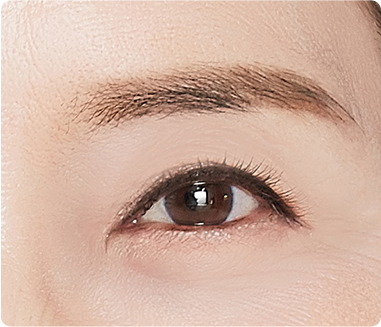
Upper Blepharoplasty: Three-Component Correction at Gong Gan
 |
 |
 |
 |
|---|
Sagging Skin Excision — Aesthetic Improvement
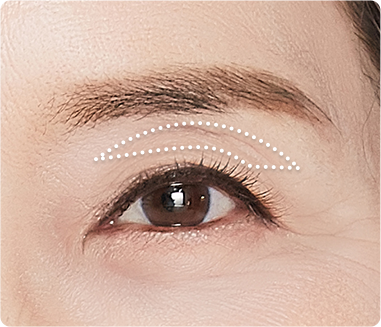
The primary step in upper blepharoplasty is the precise removal of excess upper eyelid skin along the natural eyelid crease line. Dr. Ham calibrates the amount of skin removed individually for each patient — taking into account the degree of sagging, the distance between the eyelid and the eyebrow, and the patient's desired eyelid appearance. The incision follows the natural fold of the eyelid crease, ensuring the resulting scar sits within the crease and is virtually invisible once healed. Removing the appropriate amount of skin — neither too much nor too little — is the foundation of a natural upper blepharoplasty result.
Eyelid Fat Removal — Volume Reduction and Definition
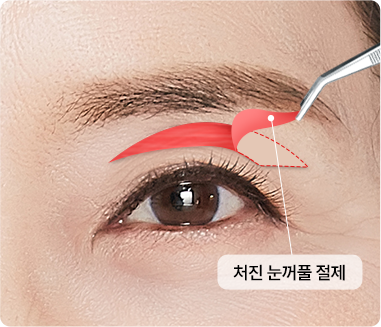
Where excess or displaced eyelid fat is contributing to the heavy, puffy appearance of the upper eyelid, it is removed during the same procedure. Fat removal reduces the visual weight of the upper eyelid and helps define the post-surgical crease more clearly. As with skin excision, the amount of fat removed is calibrated to the individual — excessive fat removal can create a hollow or aged appearance, so Dr. Ham removes only what is contributing to the concern rather than maximizing excision.
Orbicularis Oculi and Levator Muscle Correction — Functional and Recurrence Prevention
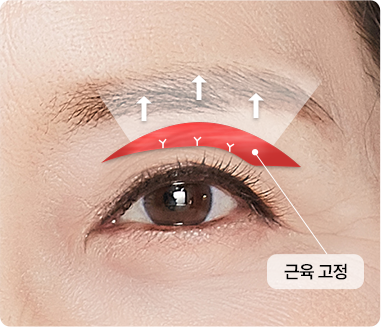
The orbicularis oculi — the ring-shaped muscle surrounding the eye that assists in closing the eyelid — can become stretched and contribute to eyelid drooping when it loses its structural tone. Simply removing skin without addressing this muscle leaves the underlying cause uncorrected and increases the likelihood of the sagging gradually returning. Dr. Ham corrects the orbicularis oculi alongside the levator palpebrae superioris where indicated, reinforcing the structural support of the eyelid and producing a result that is both functionally improved and more durable over time. This muscle correction also enables the eyelid to open more easily with its own strength, which can reduce compensatory forehead strain and soften forehead lines.
Individual results vary depending on skin elasticity, degree of sagging, muscle condition, and healing response. Realistic expectations are discussed in full during pre-operative consultation.
The Upper Blepharoplasty Process at Gong Gan Plastic Surgery
Individual Assessment and Surgical Design
Dr. Ham evaluates the eyelid and overall eye condition in detail — degree of sagging, skin thickness, fat distribution, muscle tone, distance between eye and brow, and functional concerns. The surgical area is individually designed based on these findings before any procedure is planned.
Micro-Incision Along Eyelid Crease
A clean incision is made along the natural eyelid crease line, following the existing fold to minimize scar visibility. Sagging skin and excess fat are carefully excised in the amounts determined during the pre-operative design phase.
Levator and Orbicularis Oculi Muscle Correction
Following skin and fat removal, the levator palpebrae superioris and orbicularis oculi are assessed and corrected as indicated. Muscle correction reinforces the structural integrity of the eyelid, reduces recurrence risk, and enables more natural eyelid opening.
Recovery and Follow-Up
Swelling and bruising following upper blepharoplasty typically resolve within one to two weeks. A dedicated post-operative management program is provided, and Dr. Ham personally oversees all follow-up appointments to monitor eyelid healing and the emergence of the final rejuvenated appearance.
Results, Safety, and Longevity
Upper blepharoplasty at Gong Gan produces naturally rejuvenated eyelids through a three-component correction that addresses skin, fat, and muscle simultaneously. By correcting the orbicularis oculi muscle alongside the surface tissues, the procedure targets the root cause of eyelid drooping rather than the symptom alone — producing results that are more durable and less likely to recur compared to skin-only approaches.
All procedures are supported by hospital-grade safety systems: OR CCTV monitoring confirming Dr. Ham performs every surgery personally, and multi-stage sterilization protocols exceeding standard guidelines. Only the procedures genuinely needed are performed — the amount of skin and fat excised is individually calibrated to avoid over-correction.
As with any surgical procedure, upper blepharoplasty carries risks including temporary swelling, bruising, asymmetry during healing, and a low infection risk. Serious complications are rare but possible and discussed openly during pre-operative consultation.
Why Choose Gong Gan Plastic Surgery for Upper Blepharoplasty?

As an official partner clinic of Yonsei University Severance Hospital, Gong Gan combines university-hospital-level precision with a dedicated boutique practice model that ensures every upper blepharoplasty patient receives the direct, personal attention of Dr. Ham throughout their entire journey. Upper eyelid surgery for the middle-aged patient rewards experience and anatomical precision — the subtlety of calibrating exactly how much to remove, and how much muscle correction is needed, separates natural rejuvenation from an overdone result.
Dr. Ham's 17 years of clinical experience, UCSD and UPMC fellowships, and regular KSPRS academic engagement mean every case benefits from both depth of practice and current research awareness. His all-in-one model ensures complete continuity from first assessment to final follow-up.
- Root Cause Correction — Three-component approach — skin excision, fat removal, muscle correction — addresses the structural cause of eyelid drooping rather than surface appearance alone
- Natural Calibration — Skin and fat excision amounts individually designed per patient — never over-corrected, always proportionate to the individual's anatomy and goals
- Full Surgical Transparency — OR CCTV monitoring confirms every procedure is performed exclusively by Dr. Ham
Patient Experiences
Upper Blepharoplasty Patient, 50s
This patient had noticed her upper eyelids becoming progressively heavier and more hooded over several years, occasionally obstructing her peripheral vision and making her appear more tired than she felt. Dr. Ham performed upper blepharoplasty with orbicularis oculi muscle correction, individually calibrating the skin excision to create a natural-looking crease. At follow-up she noted a significantly more open, refreshed eye appearance that looked natural rather than operated — and that the visual obstruction had resolved entirely.
Upper Eyelid Lift Patient, 40s
A patient in his mid-40s sought upper blepharoplasty for both cosmetic and functional reasons — heavy eyelids were affecting his appearance and causing him to raise his brows constantly, contributing to forehead lines. Dr. Ham performed skin excision with levator and orbicularis correction. The patient reported that both the eyelid heaviness and the habitual brow-raising reduced noticeably after recovery, with a naturally youthful eye shape as the outcome.
Ready to Restore Naturally Youthful, Open Eyes? Book Your Upper Eyelid Consultation.
If drooping, heavy, or hooded upper eyelids are affecting your appearance, vision, or confidence, upper blepharoplasty at Gong Gan Plastic Surgery offers a precise, three-component correction designed to restore naturally youthful eyelids without an overdone result. Dr. Kiweon Ham combines 17 years of clinical expertise, Severance Hospital training, UCSD and UPMC fellowships, and KSPRS Academic Committee membership to deliver upper eyelid surgery grounded in structural accuracy, individual calibration, and genuine patient understanding. Every stage is managed directly by Dr. Ham.
[Book Your Upper Blepharoplasty Consultation at Gong Gan Plastic Surgery]
For direct inquiries, contact the Gong Gan Plastic Surgery appointment desk to speak with the medical coordination team about your upper eyelid surgery goals and eligibility.
Other Services
Explore additional treatments offered by our specialists.
Fat Grafting
Fat grafting is a procedure that harvests the patient's own fat from a donor area, purifies it, and reintroduces it into specific facial zones to restore volume, improve contour, and create a more three-dimensional, naturally youthful facial appearance.
Learn More

Men's Eye Surgery
Men's eye surgery — encompassing male double eyelid surgery, ptosis correction, and eyelid refinement — requires a fundamentally different approach from female blepharoplasty.
Learn More

Implant-Free Rhinoplasty
Implant-free rhinoplasty is a surgical approach that reshapes and refines the nose entirely using the patient's own autologous tissue — with no artificial implants of any kind.
Learn More