17+ Years of Personalized Eye, Nose & Lifting Plastic Surgery in Gangnam, Seoul


Nose Surgery
Nasal Tip Surgery
Nasal tip surgery is a surgical procedure that refines the shape, definition, and projection of the nasal tip to create a more balanced and harmonious facial appearance.
Schedule a ConsultationWhat Is Nasal Tip Surgery and How Does It Transform Your Appearance?

Nasal tip surgery — also referred to as nasal tip plasty or bulbous nose correction — is a surgical procedure that refines the shape, definition, and projection of the nasal tip to create a more balanced and harmonious facial appearance. Even subtle changes to the tip can significantly alter the overall impression of the face when viewed from any angle. For patients with a blunt, wide, or poorly defined nasal tip, tip plasty offers a precise, targeted solution without necessarily modifying the entire nasal structure.
At Gong Gan Plastic Surgery, nasal tip surgery is approached as a highly individualised procedure. The surgical technique and materials selected depend entirely on the patient's specific tip anatomy — whether the concern stems from splayed alar cartilage, excess soft tissue, insufficient tip projection, or a combination of these factors. Dr Kiweon Ham evaluates each case using 3D-CT imaging alongside detailed external analysis to determine the most appropriate and effective correction strategy, prioritising autologous cartilage for natural, long-lasting tip definition.
Who Is a Candidate for Nasal Tip Plasty or Bulbous Nose Correction?
Nasal tip surgery is suitable for patients who are bothered by the shape, size, or definition of their nasal tip and wish to achieve a more refined, proportionate result. Candidacy is assessed through clinical evaluation and 3D-CT imaging.
Ideal candidates include:
- Individuals in their 20s–40s with a bulbous, blunt, or rounded nasal tip that feels disproportionate to their facial features
- Those with naturally splayed or wide alar cartilage contributing to an undefined tip shape
- Patients with excess subcutaneous fat or soft tissue in the nasal tip creating a thick, heavy appearance
- Those seeking improved tip projection and definition without full rhinoplasty
- Individuals who want a more three-dimensional, naturally refined nasal tip visible from all angles
- Patients preferring an approach that uses their own tissue for natural and biocompatible results
- Those who want tip refinement that considers the nasolabial angle and overall facial balance — not just isolated tip height
- Patients in good general health who have realistic expectations about achievable outcomes
Meet Dr Kiweon Ham — Nasal Tip Surgery Specialist at Gong Gan Plastic Surgery
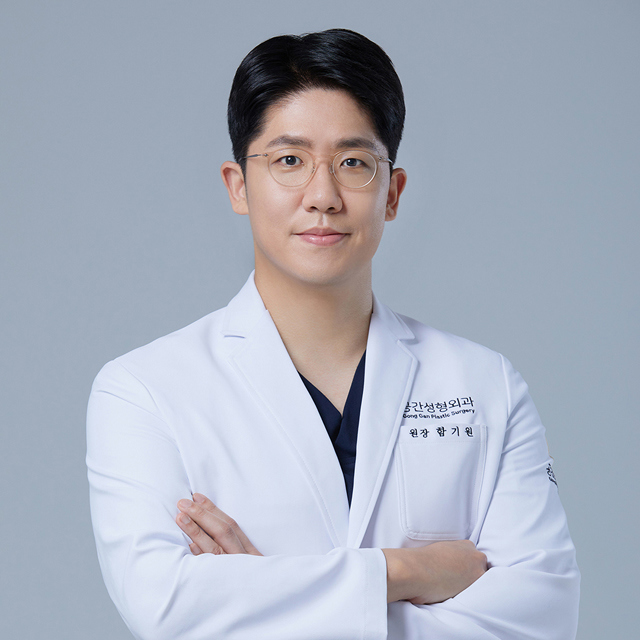
Dr Kiweon Ham Plastic Surgery Specialist, M.D.
Gong Gan Plastic Surgery is led by Representative Director Dr Kiweon Ham, a certified specialist plastic surgeon with 17 years of clinical experience and one of the most thorough training backgrounds in facial plastic surgery in Korea.
Dr Ham completed his medical degree at Yonsei University College of Medicine and his plastic surgery residency at Severance Hospital. He subsequently undertook advanced fellowships at the University of California San Diego Medical Center (UCSD) and the University of Pittsburgh Medical Center (UPMC), before returning to Severance as a Former Clinical Instructor in Plastic Surgery. Gong Gan Plastic Surgery operates as an official partner clinic of Yonsei University Severance Hospital.
He holds Life Membership and serves on the Academic Committee of the Korean Society of Plastic and Reconstructive Surgeons (KSPRS), and is a full member of KSAPS, KCPCA, and IPRAS. His active membership in the Rhinoplasty Research Society reflects a commitment to advancing nasal surgery technique — including the precise, anatomy-specific demands of nasal tip plasty.
Dr Ham's approach to tip surgery is grounded in a single principle: the nasal tip must be designed in harmony with the patient's entire facial structure — their forehead slope, facial proportions, lip shape, and nasolabial angle — never in isolation. Every tip surgery plan at Gong Gan is built from individual anatomical data, not a standard template.
[Book a Consultation with Dr Kiweon Ham]
Nasal Tip Surgery Approaches: Case-Based Treatment at Gong Gan
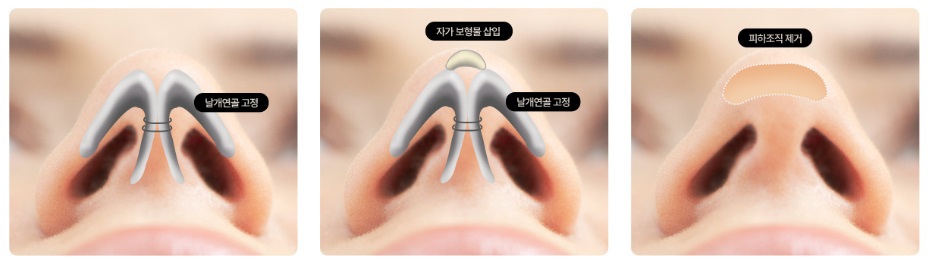
Case 1: Standard Nasal Tip — Alar Cartilage Binding
For patients whose tip height is not significantly low and whose skin thickness is within a moderate range, binding the splayed alar cartilage alone can produce a noticeably more defined and refined tip shape. This is the least invasive approach and delivers meaningful improvement for suitable candidates. The result is a cleaner, more structured tip contour that enhances the nose's overall appearance without major structural alteration.
Case 2: Splayed Alar Cartilage with Low Projection
When the alar cartilage is more widely splayed and the patient desires greater tip definition, Dr Ham combines alar cartilage binding with autologous cartilage grafting directly to the tip. In some cases, partial cartilage resection and repositioning is also performed before the autologous graft is added. This multi-step approach delivers a more upright, slim, and clearly defined nasal tip with improved three-dimensional projection from all viewing angles.
Case 3: Bulbous Tip with Excess Soft Tissue
A thick, blunt nasal tip may result from genuinely thick skin, from well-developed internal soft tissue, or from both. In these cases, Dr Ham removes or repositions a portion of the subcutaneous fat and soft tissue within the tip while simultaneously adjusting the alar cartilage. This combined approach reduces the bulk of the tip and produces a meaningfully slimmer, more refined shape. Results vary depending on individual skin characteristics and tissue composition.
Autologous Cartilage and Material Selection for Nasal Tip Surgery
The choice of material for nasal tip surgery is determined individually through consultation and is central to achieving natural, safe, and durable results:
- Septal Cartilage: Firm and straight; harvested during the same surgery with no additional scarring; one of the most widely used tip materials
- Ear Cartilage: Soft and elastic; ideal for natural-looking tip shaping; frequently combined with septal cartilage to complement each material's properties
- Costal Cartilage (Rib): Firm with ample volume; suited to revision cases or more dramatic reshaping; autologous preferred, donor option available when harvest is a concern
- Autologous Dermis: Harvested from the buttock or chest; used when skin is thin or when coverage needs reinforcement; absorption rate varies individually and may lead to minor post-operative shape changes over time
Individual results vary based on skin type, tissue composition, cartilage quality, and healing response. Realistic outcomes are discussed in detail during pre-operative consultation.
The Nasal Tip Surgery Process at Gong Gan Plastic Surgery
 |
 |
 |
 |
|---|
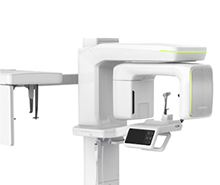
- 3D-CT Imaging and Structural Assessment: The HDX 3D-CT imaging system provides a detailed view of the nasal interior — cartilage condition, soft tissue volume, internal structure, and anatomical variation — forming the precise diagnostic basis for tip surgery planning. External appearance alone does not reveal the full picture of what correction requires.
- Photographic Analysis and Goal-Setting Consultation: Standardised photographs are reviewed alongside CT findings. Dr Ham discusses the achievable range of improvement, identifies the specific anatomical factors contributing to the patient's tip concerns, and establishes transparent, realistic expectations before any surgical plan is finalised.
- Personalised Surgical Plan and Material Selection: A fully individualised plan is developed based on the diagnostic findings and the patient's goals. Surgical technique — alar binding, cartilage grafting, soft tissue adjustment, or a combination — is selected alongside the most appropriate autologous material for each patient's unique anatomy and lifestyle.
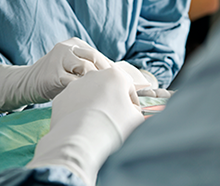
- Nasal Tip Surgery Procedure: Dr Ham performs the procedure directly, using precise anatomical dissection to minimise trauma and support efficient recovery. Tip height is determined by the patient's forehead slope and facial line angles rather than a fixed measurement. The nasolabial angle — the line connecting the base of the nose to the upper lip — is carefully considered to ensure the final result integrates naturally with the patient's complete facial profile.
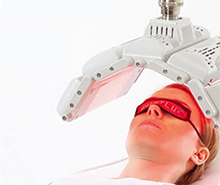
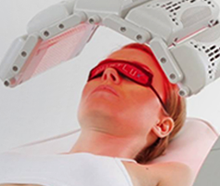
- Post-Operative Care and Recovery: Mild swelling and bruising following nasal tip surgery are expected and typically resolve within one to two weeks. A dedicated regenerative and anti-swelling support program is provided to facilitate a more comfortable recovery and support a quicker return to daily activities.
- Follow-Up and Outcome Monitoring: Dr Ham personally manages all follow-up appointments throughout the recovery period. Tip definition and shape become progressively more visible as swelling subsides, with the final outcome continuing to refine over the following months.
Nasal Tip Surgery Results, Safety, and Longevity
 |
 |
 |
 |
|---|
Nasal tip surgery at Gong Gan is designed for durable, naturally integrated results. By prioritising autologous cartilage — matched precisely to the patient's anatomy — over standardised implant approaches, the clinic's technique supports outcomes that remain stable and natural-looking over the long term. Tip height determined by the patient's individual facial angles, rather than arbitrary elevation, further reduces the risk of an unnatural or disproportionate result.
All procedures are supported by hospital-grade safety systems: HDX 3D-CT for anatomically precise pre-operative planning, operating theatre CCTV monitoring confirming that Dr Ham performs every surgery personally, and multi-stage sterilisation protocols exceeding standard medical guidelines.
As with any surgical procedure, nasal tip plasty carries inherent risks including temporary swelling, bruising, discomfort, and a low risk of infection managed through strict sterile technique. Serious complications are rare but possible and are discussed openly before surgery. Dr Ham prioritises full transparency about both realistic benefits and potential risks so every patient can proceed with complete confidence.
Why Choose Gong Gan Plastic Surgery for Nasal Tip Surgery?
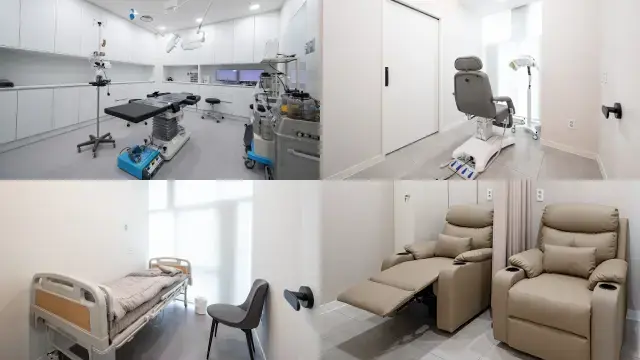
Gong Gan Plastic Surgery's position as an official partner clinic of Yonsei University Severance Hospital means patients receive university-hospital-level diagnostic capability and surgical precision within a dedicated, single-surgeon boutique practice. This environment is particularly well-suited to nasal tip surgery, where fine anatomical distinctions and individualised material selection determine the quality of the outcome.
Dr Ham's 17 years of experience, international fellowships at UCSD and UPMC, and active Rhinoplasty Research Society membership bring both clinical depth and ongoing research awareness to every tip surgery case. His all-in-one care model ensures he personally manages every stage — from initial 3D-CT assessment and surgical planning through the procedure and post-operative follow-up — with no rotating surgeons and no communication gaps.
- Anatomy-First Diagnosis: HDX 3D-CT imaging reveals internal cartilage and soft tissue conditions invisible on external examination, enabling precise and safe surgical planning
- Autologous Cartilage Priority: Safety-verified materials selected individually; autologous septal, ear, or costal cartilage prioritised for natural, biocompatible tip results
- Full Surgical Transparency: Operating theatre CCTV monitoring confirms every procedure is performed exclusively and entirely by Dr Ham
Patient Experiences: Nasal Tip Plasty at Gong Gan Plastic Surgery
Bulbous Tip Correction Patient, 20s
This patient had long been bothered by a rounded, undefined nasal tip that she felt made her nose appear flat from all angles. Following 3D-CT evaluation, Dr Ham identified excess soft tissue as the primary contributing factor alongside splayed alar cartilage. A combined soft tissue adjustment and autologous ear cartilage graft was performed. At follow-up, she noted a clearly more defined and three-dimensional tip that felt natural and proportionate to her face.
Nasal Tip Plasty Patient, 30s
A male patient sought nasal tip surgery to address a blunt, wide tip that he felt was out of proportion with his overall facial structure. Dr Ham performed alar cartilage binding combined with septal cartilage grafting, with tip height calibrated to the patient's forehead slope and nasolabial angle. The patient reported a smooth recovery and a result that enhanced his facial definition without appearing surgically altered.
Ready for a More Defined, Naturally Refined Nasal Tip?
If a bulbous, blunt, or undefined nasal tip is affecting your confidence and facial balance, nasal tip surgery at Gong Gan Plastic Surgery offers a precise, individually planned solution. Dr Kiweon Ham combines 17 years of clinical expertise, Severance Hospital training, UCSD and UPMC fellowships, and Rhinoplasty Research Society membership to deliver nasal tip plasty grounded in structural accuracy and genuine patient understanding. From 3D-CT assessment to final recovery, every stage is managed directly by Dr Ham — ensuring your goals are heard, carefully planned, and executed with the detail your face deserves.
[Book Your Nasal Tip Surgery Consultation at Gong Gan Plastic Surgery]
Other Services
Explore additional treatments offered by our specialists.

Fat Grafting
Fat grafting is a procedure that harvests the patient's own fat from a donor area, purifies it, and reintroduces it into specific facial zones to restore volume, improve contour, and create a more three-dimensional, naturally youthful facial appearance.
Learn More

Men's Eye Surgery
Men's eye surgery — encompassing male double eyelid surgery, ptosis correction, and eyelid refinement — requires a fundamentally different approach from female blepharoplasty.
Learn More

Implant-Free Rhinoplasty
Implant-free rhinoplasty is a surgical approach that reshapes and refines the nose entirely using the patient's own autologous tissue — with no artificial implants of any kind.
Learn More