17+ Years of Personalized Eye, Nose & Lifting Plastic Surgery in Gangnam, Seoul


Nose Surgery
Alar Reduction
Alar base reduction is a surgical procedure that narrows the width of the nostrils and alar base to create a more refined and proportionate nasal appearance.
Schedule a ConsultationAlar Base Reduction: A Procedure That Requires a Complex Diagnosis, Not a Simple Size Reduction

Alar base reduction — also referred to as nostril reduction surgery or wide nose correction — is a surgical procedure that narrows the width of the nostrils and alar base to create a more refined and proportionate nasal appearance. While the concept may seem straightforward, the alar base is one of the most visually prominent areas of the nose, and any correction performed here must balance multiple considerations simultaneously: scar placement, alar symmetry, nostril shape, nasal function, and the overall proportional relationship between the nose and the face.
At Gong Gan Plastic Surgery, alar reduction is never approached as a simple size-reduction procedure. Dr. Kiweon Ham evaluates each patient through a comprehensive diagnostic process — including 3D-CT imaging and detailed external analysis — to identify the specific anatomical factors contributing to the wide appearance and determine the most appropriate surgical technique. The surgical approach is selected based on whether the width originates from the outer alar surface, the inner nostril floor, or both, ensuring that the correction addresses the actual structural cause rather than applying a uniform method to every case.
Who Is a Candidate for Alar Reduction or Nostril Reshaping Surgery?
Alar base reduction is suitable for patients who are bothered by the width, size, or proportion of their nostrils or alar base and wish to achieve a more refined and balanced nasal appearance. Candidacy is confirmed through clinical evaluation and 3D-CT imaging.
Ideal candidates include:
- Individuals in their 20s–50s whose alar base width feels disproportionate to their overall facial features
- Those with a wide outer alar surface or noticeably large nostril openings that draw attention when viewed from the front
- Patients whose nostril floor is wide internally, creating an expansive nostril base that contributes to a flat or spread nasal appearance
- Those seeking a more refined nasal base that better complements their facial width and proportions
- Individuals who want a natural-looking result with minimal visible scarring
- Patients who wish to address alar width alongside other nasal concerns as part of a comprehensive rhinoplasty plan
- Those in good general health with realistic expectations about what alar reduction can achieve
- Patients who want both the aesthetic and functional dimensions of their nasal base evaluated before proceeding with surgery
Meet Dr. Kiweon Ham — Alar Reduction and Nose Surgery Specialist

Dr. Kiweon Ham Plastic Surgery Specialist, M.D.
Gong Gan Plastic Surgery is led by Representative Director Dr. Kiweon Ham , a board-certified plastic surgeon with 17 years of clinical experience and one of the most comprehensive training backgrounds in facial plastic surgery available in Korea.
Dr. Ham completed his medical degree at Yonsei University College of Medicine and his plastic surgery residency at Severance Hospital . He subsequently undertook advanced fellowships at the University of California San Diego Medical Centre (UCSD) and the University of Pittsburgh Medical Centre (UPMC) , before returning to Severance as a Former Clinical Instructor in Plastic Surgery. Gong Gan Plastic Surgery operates as an official partner clinic of Yonsei University Severance Hospital.
He holds Life Membership and serves on the Academic Committee of the Korean Society of Plastic and Reconstructive Surgeons (KSPRS) , and is a full member of KSAPS , KCPCA , and IPRAS . His active membership in the Rhinoplasty Research Society reflects a sustained commitment to advancing all aspects of nasal surgery — including the precise, detail-sensitive demands of alar base correction.
Dr. Ham's approach to alar reduction is defined by the understanding that this area of the nose demands exceptional precision in incision placement, tissue handling, and scar management. A result that looks natural and proportionate depends not just on how much tissue is removed, but on where, how, and in what combination the correction is performed — always guided by the individual patient's anatomy and facial balance.
[Book a Consultation with Dr. Kiweon Ham]
Alar Reduction Techniques: Case-Based Approaches at Gong Gan
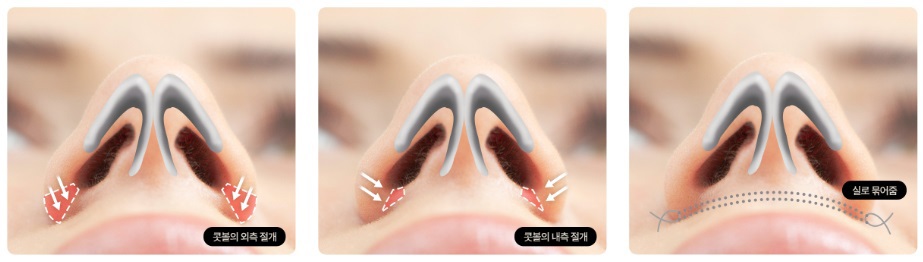
Case 1: External Incision — Wide Outer Alar Surface or Large Nostrils
The external incision approach is the most widely used technique for alar base reduction and consistently yields high patient satisfaction. It is indicated when the outer surface of the alar base is broad or when the nostril openings are large in proportion to the face. An incision is placed along the natural junction of the alar base and the cheek — a location that allows precise tissue removal while keeping resulting scars within the natural contour lines of the nose. This technique reduces both the alar width and the nostril size, producing a cleaner, more refined nasal base that sits in better proportion with the surrounding facial features. Scar placement is carefully planned to minimise visibility during the healing process.
Case 2: Internal Incision — Wide Nostril Floor
When the primary concern is an excessively wide nostril floor — where the internal base of the nostril occupies a large area — the internal incision approach is used. The incision is placed inside the nostril, making it entirely concealed from external view. This technique reduces the width and size of the alar from within, addressing the internal spatial excess that contributes to a spread or flat nasal base appearance. It is particularly suited to patients whose outer alar surface is not the primary issue but whose nostril floor width creates an overall sense of nasal broadness.
Case 3: Non-Incision Method — Thread Technique
For patients whose alar width concerns are more moderate, or as a complementary technique alongside incision-based approaches, the non-incision method offers a less invasive option. A micro-incision is made on the nostril floor, through which a thread is inserted and used to gather and reposition the alar tissue inward. This technique can be performed independently in suitable cases or combined with either the external or internal incision method to achieve a more complete and refined result. The combined approach is selected based on the specific structural characteristics of the patient's alar base.
Individual results vary depending on alar anatomy, skin characteristics, tissue elasticity, and healing response. The most appropriate technique or combination of techniques will be recommended following thorough diagnostic evaluation. Realistic expectations are discussed in full during pre-operative consultation, and no specific outcome can be guaranteed.
The Alar Reduction Process at Gong Gan Plastic Surgery
 |
 |
 |
 |
|---|
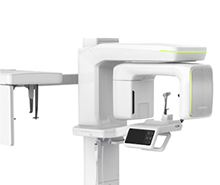
- 3D-CT Imaging and Structural Assessment: The HDX 3D-CT imaging system provides a comprehensive assessment of the nasal structure — including alar anatomy, nostril dimensions, internal nasal architecture, and the relationship between the alar base and surrounding facial features. This internal diagnostic view ensures that surgical planning is based on complete anatomical understanding rather than surface appearance alone.
- Photographic Analysis and Consultation: Standardised photographs are reviewed alongside CT findings to objectively evaluate the current alar base proportions. Dr. Ham discusses the specific anatomical factors contributing to the patient's concerns, explains the recommended technique or combination of techniques, and establishes transparent and realistic expectations for the achievable outcome.
- Personalised Surgical Plan and Technique Selection: A fully individualised plan is developed based on the diagnostic findings and patient goals. The appropriate technique — external incision, internal incision, non-incision thread method, or a combination — is selected based on the precise structural characteristics of the patient's alar base, nostril dimensions, and overall facial proportions.
- Alar Reduction Procedure: Dr. Ham performs the surgery directly, with meticulous attention to incision placement, tissue handling, and symmetry throughout. Where external incisions are made, they are positioned along natural anatomical boundaries to minimise scar visibility. The extent of reduction is calibrated to the patient's individual facial width and proportions — the goal is a natural, balanced result that refines without over-correcting or creating an unnatural nostril shape.
- Post-Operative Care and Recovery: Mild swelling and sensitivity around the alar base are expected following surgery and typically resolve within one to two weeks. A dedicated regenerative and anti-swelling support programme is provided to facilitate a more comfortable recovery and support a timely return to daily activities.
- Follow-Up and Outcome Monitoring: Dr. Ham personally oversees all follow-up appointments throughout the recovery period. Alar symmetry and refined proportions become progressively more apparent as swelling resolves, with scar maturation and final results continuing to improve over the following months.
Results, Safety, and Longevity of Alar Base Reduction
 |
 |
 |
 |
|---|
Alar base reduction at Gong Gan is designed for stable, long-lasting results. Because the correction is performed at the structural level — removing or repositioning tissue rather than relying on temporary measures — the improved alar proportions remain consistent over time. Careful scar management and precise incision placement support a healing process that minimises visible scarring and preserves natural nostril contours.
All procedures are supported by hospital-grade safety systems: HDX 3D-CT for comprehensive pre-operative anatomical planning, operating theatre CCTV monitoring confirming that Dr. Ham performs every procedure personally, and multi-stage sterilisation protocols exceeding standard medical guidelines.
As with any surgical procedure, alar reduction carries inherent risks including temporary swelling, bruising, sensitivity, and a low risk of infection managed through strict sterile technique. Asymmetry during the healing phase is common and typically resolves as swelling subsides. Serious complications are rare but possible and are discussed openly during pre-operative consultation. Dr. Ham maintains complete transparency about both the realistic benefits and the potential risks of nostril reduction surgery so every patient can make a fully informed decision.
Why Choose Gong Gan Plastic Surgery for Alar Reduction?

As an official partner clinic of Yonsei University Severance Hospital, Gong Gan Plastic Surgery combines university-hospital-level diagnostic precision with the personalised attention of a boutique single-surgeon practice. This environment is particularly well-suited to alar reduction, where fine anatomical distinctions, careful scar planning, and individualised technique selection determine the quality of the outcome.
Dr. Ham's 17 years of clinical experience, international fellowships at UCSD and UPMC , and Rhinoplasty Research Society membership bring both clinical depth and research-level awareness to every alar correction case. His all-in-one care model means he personally manages every stage — from 3D-CT assessment and surgical planning through the procedure and post-operative follow-up — with no rotating surgeons and no gaps in care continuity.
- Comprehensive Diagnostic Approach: Alar reduction at Gong Gan begins with full 3D-CT imaging and multi-factor assessment — scar placement, alar balance, nostril shape, and nasal function — ensuring the correction addresses the actual anatomical cause
- Case-Specific Technique Selection: External incision, internal incision, non-incision thread method, or a tailored combination — technique is chosen based on individual anatomy, not a standardised formula
- Full Surgical Transparency: Operating theatre CCTV monitoring confirms every procedure is performed exclusively by Dr. Ham, providing complete confidence in surgical accountability and consistency
Patient Experiences: Alar Base Reduction at Gong Gan Plastic Surgery
External Incision Alar Reduction Patient, 20s
This patient had long been bothered by a wide alar base that she felt made her nose appear flat and disproportionate to her facial features. Following 3D-CT evaluation, Dr. Ham recommended the external incision approach to reduce both the outer alar width and the nostril size. At follow-up, she noted that the refined nasal base significantly improved her overall facial balance and that the scars were minimal and well-concealed within the natural contour of the alar base.
Combined Technique Alar Reduction Patient, 30s
This patient presented with both a wide nostril floor and moderate outer alar excess. Dr. Ham performed a combination of internal incision and non-incision thread technique to address both structural factors. The patient reported a smooth recovery and noted at her follow-up appointments that the result looked natural and proportionate — a more refined nasal base without any appearance of over-correction.
Ready for a More Refined, Proportionate Nasal Base?
If a wide alar base or disproportionate nostrils are affecting your facial balance and confidence, alar reduction at Gong Gan Plastic Surgery offers a precise, individually planned path to a naturally refined result. Dr. Kiweon Ham combines 17 years of clinical expertise, Severance Hospital training, UCSD and UPMC fellowships, and Rhinoplasty Research Society membership to deliver nostril reduction surgery grounded in structural accuracy, careful scar management, and genuine patient understanding. From 3D-CT assessment to final recovery, every stage is managed directly by Dr. Ham — ensuring your goals are heard, carefully planned, and executed with the detail your facial proportions deserve.
[Book Your Alar Reduction Consultation at Gong Gan Plastic Surgery]
Other Services
Explore additional treatments offered by our specialists.

Men's Monolid Ptosis Correction
Men's monolid ptosis correction is a surgical procedure that addresses weak eyelid-opening muscle strength to create a more alert, defined, and naturally open eye appearance.
Learn More

Brow Ptosis Correction
Brow ptosis correction is a procedure that addresses drooping upper eyelid skin by making an incision directly below the eyebrow, removing the excess sagging tissue, and lifting the eyelid upward.
Learn More

Men's Rhinoplasty
Men's rhinoplasty is a specialized approach to nose surgery that accounts for the fundamental differences between male and female facial anatomy, skin characteristics, and aesthetic ideals.
Learn More