17+ Years of Personalized Eye, Nose & Lifting Plastic Surgery in Gangnam, Seoul


Nose Surgery
Implant-Free Rhinoplasty
Implant-free rhinoplasty is a surgical approach that reshapes and refines the nose entirely using the patient's own autologous tissue — with no artificial implants of any kind.
Schedule a ConsultationWhat Is Implant-Free Rhinoplasty?

Implant-free rhinoplasty reshapes the nose entirely using the patient's own autologous tissue — no synthetic implants of any kind. Cartilage and tissue harvested from the nose, ear, or rib area are used to correct tip height , bridge definition , and the bridge-to-tip connection , producing a naturally integrated nasal profile that moves and ages with the face.
At Gong Gan Plastic Surgery, this approach is recommended for patients who already have a relatively higher bridge and need correction limited to the tip, and for those who prefer to avoid artificial implants entirely. Dr. Kiweon Ham evaluates each case through 3D-CT imaging and detailed consultation to confirm suitability and select the most appropriate autologous materials and technique for that individual's anatomy.
Who Is a Candidate for Implant-Free Autologous Rhinoplasty?
- Individuals with a naturally higher bridge requiring tip or bridge-to-tip correction only
- Those with a low nasal tip relative to the bridge, creating an unbalanced or arrow-like side profile
- Patients with both a low bridge and low tip who prefer a fully autologous correction
- Those with a strong preference for natural materials or aversion to artificial implants
- Patients who experienced prior implant-related complications seeking an autologous revision approach
- Those seeking subtle, natural-looking improvement that integrates seamlessly with their features
- Patients who understand that implant-free rhinoplasty has augmentation limitations compared to implant-based approaches and hold realistic expectations
Meet Dr. Kiweon Ham — Implant-Free Rhinoplasty Specialist
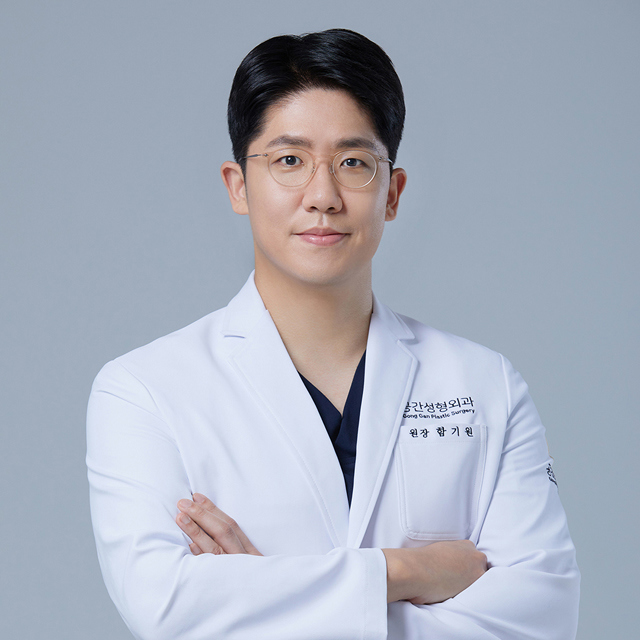
Dr. Kiweon Ham
Plastic Surgery Specialist, M.D.
Gong Gan Plastic Surgery is led by Representative Director Dr. Kiweon Ham , a board-certified plastic surgeon with 17 years of clinical experience . He completed his medical degree at Yonsei University College of Medicine , his residency at Severance Hospital , and advanced fellowships at UCSD and UPMC before returning to Severance as a Former Clinical Instructor . Gong Gan operates as an official partner clinic of Yonsei University Severance Hospital .
Dr. Ham holds Life Membership and serves on the Academic Committee of KSPRS , and is a full member of KSAPS , KCPCA , and IPRAS . His membership in the Rhinoplasty Research Society reflects a sustained commitment to advancing autologous nasal surgery — where material selection, graft design, and structural support must be precisely calibrated without the predictability of synthetic implants.
His approach is straightforward: autologous rhinoplasty demands a higher level of anatomical precision than implant-based surgery, because the result depends entirely on how skillfully the patient's own tissue is harvested, shaped, and integrated into the nasal structure.
[Book a Consultation with Dr. Kiweon Ham]
Case-Based Approaches and Autologous Materials
Case 1: Both Bridge and Tip Are Low
Alar cartilage is bound and reinforced to establish tip support, autologous tissue builds the tip's structural foundation, and additional material softly fills and connects the bridge-to-tip space. The result is a smooth, continuous nasal line that looks naturally elevated from all angles. Augmentation is more limited than with synthetic implants, but integration is entirely natural.
Case 2: Tip Only Is Low
When the bridge is adequate but the tip is comparatively low — sometimes creating an arrow-like profile — alar cartilage binding alone may be sufficient for suitable candidates. Where the height disparity is more pronounced, autologous tissue raises the tip and connects it smoothly to the bridge, restoring a natural, flowing nasal line.
Case 3: Bridge Only Is Low
Implant-free bridge augmentation has inherent limitations compared to synthetic implants. However, autologous tissue can subtly fill and refine the bridge-to-tip junction, creating a more cohesive nasal line that appears naturally balanced from every angle — prioritizing proportion and integration over dramatic augmentation.
Autologous Materials
- Septal Cartilage: Firm, no extra scarring, harvested during surgery — highly versatile for tip support and bridge-to-tip connection
- Ear Cartilage: Soft and elastic — ideal for natural tip shaping; frequently combined with septal cartilage
- Costal Cartilage (Rib): Firm with generous volume — suited to revision cases or more substantial structural support; donor option available
- Autologous Dermis: Harvested from buttock or chest — used when skin is thin; absorption rate varies individually and may cause minor post-operative shape changes over time
The Implant-Free Rhinoplasty Process
 |
 |
 |
 |
|---|
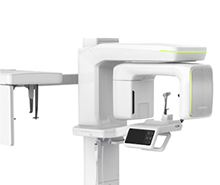
- 3D-CT Imaging and Tissue Assessment — The HDX 3D-CT system evaluates cartilage condition, available autologous tissue volume, and the structural relationship between bridge and tip — essential in implant-free cases where the entire plan depends on what the patient's own tissue can provide
- Photographic Analysis and Consultation — Reviewed alongside CT findings; Dr. Ham discusses the appropriate technique, realistic improvement range, and honest limitations of the autologous approach for the individual case
- Personalized Plan and Material Selection — Autologous materials selected based on available tissue, structural requirements, and desired outcome; no standardized formula applied
- Procedure — Dr. Ham performs the surgery directly; tip height calibrated to forehead slope and facial line angles; nasolabial angle incorporated into tip design for a proportionate, natural profile
- Post-Operative Care — Swelling and bruising typically resolve within one to two weeks; regenerative and anti-swelling support program provided
- Follow-Up — Dr. Ham personally manages all follow-up; final tissue integration and shape continue to refine over several months
Results, Safety, and Longevity
 |
 |
 |
 |
|---|
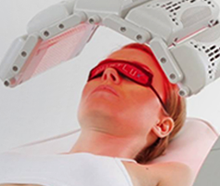
Because all materials are the patient's own, implant-related risks — displacement , visibility through skin , foreign body reaction — are eliminated. Results integrate naturally with surrounding tissue and are designed to remain stable long-term. Autologous dermis carries a variable absorption rate that may affect shape over time, discussed openly before surgery.
All procedures are backed by hospital-grade safety systems: HDX 3D-CT planning , OR CCTV monitoring confirming Dr. Ham performs every surgery personally, and multi-stage sterilization protocols exceeding standard guidelines. As with any surgery, risks include temporary swelling, bruising, discomfort, and low infection risk. Serious complications are rare but possible and reviewed fully during pre-operative consultation.
Why Choose Gong Gan Plastic Surgery for Implant-Free Rhinoplasty?
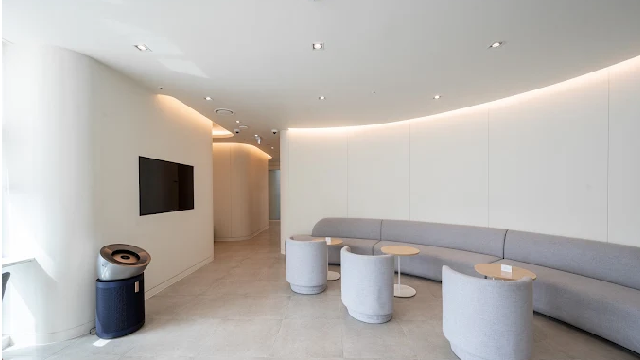
As an official partner clinic of Yonsei University Severance Hospital , Gong Gan delivers university-hospital-level diagnostic precision in a dedicated boutique practice — well-suited to implant-free rhinoplasty, where precise tissue assessment and individualized planning determine everything.
Dr. Ham's 17 years of experience , UCSD and UPMC fellowships , and Rhinoplasty Research Society membership bring research-level expertise to every autologous case. His all-in-one care model ensures he personally manages every stage with no rotating surgeons and no communication gaps.
- Autologous Tissue Expertise: Precise cartilage harvest, shaping, and structural integration backed by 17 years of experience and ongoing Rhinoplasty Research Society membership
- Honest Case Assessment: Transparent guidance on what autologous correction can realistically achieve for each patient's structural starting point
- Full Surgical Transparency: OR CCTV monitoring confirms every procedure is performed exclusively by Dr. Ham
Patient Experiences
Autologous Tip Correction Patient, 20s
A patient with a naturally higher bridge and a low, undefined tip — preferring no implants — underwent autologous tip correction using septal cartilage. Dr. Ham built the tip support structure and connected it smoothly to the existing bridge height. At follow-up, she noted a naturally elevated, well-defined tip in complete harmony with her facial features.
Implant-Free Full Rhinoplasty Patient, 30s
A patient with both a low bridge and low tip and a strong preference for fully autologous surgery underwent correction using a combination of septal and ear cartilage. The patient reported a comfortable recovery and was satisfied with a visibly improved yet entirely natural nasal profile.
Ready for a Natural Nasal Line — Without Artificial Implants?
If you want a more refined and balanced nose using only your own tissue, implant-free rhinoplasty at Gong Gan Plastic Surgery offers a precise, individually planned autologous solution. Dr. Kiweon Ham combines 17 years of expertise , Severance Hospital training, UCSD and UPMC fellowships , and Rhinoplasty Research Society membership to deliver natural nose surgery built entirely on autologous tissue integrity. From 3D-CT assessment to final recovery, every stage is managed directly by Dr. Ham.
[Book Your Implant-Free Rhinoplasty Consultation at Gong Gan Plastic Surgery]
For direct inquiries, contact the Gong Gan Plastic Surgery appointment desk to speak with the medical coordination team about your implant-free rhinoplasty goals and eligibility.
Other Services
Explore additional treatments offered by our specialists.

Men's Monolid Ptosis Correction
Men's monolid ptosis correction is a surgical procedure that addresses weak eyelid-opening muscle strength to create a more alert, defined, and naturally open eye appearance.
Learn More

Brow Ptosis Correction
Brow ptosis correction is a procedure that addresses drooping upper eyelid skin by making an incision directly below the eyebrow, removing the excess sagging tissue, and lifting the eyelid upward.
Learn More

Men's Rhinoplasty
Men's rhinoplasty is a specialized approach to nose surgery that accounts for the fundamental differences between male and female facial anatomy, skin characteristics, and aesthetic ideals.
Learn More