17+ Years of Personalized Eye, Nose & Lifting Plastic Surgery in Gangnam, Seoul


Facelift & Lifting
Mini Facelift
A mini facelift is a surgical procedure that addresses targeted areas of facial sagging through a more limited incision scope than a full facelift, while still reaching the deep structural layers of the face that produce meaningful and lasting lifting results.
Schedule a ConsultationWhat Is a Mini Facelift and How Is It Different from a Full Facelift?

A mini facelift — also referred to as a partial facelift or mini lift — is a surgical procedure that addresses targeted areas of facial sagging through a more limited incision scope than a full facelift, while still reaching the deep structural layers of the face that produce meaningful and lasting lifting results. It is designed for patients who notice specific areas of concern — typically the mid-face, cheeks, nasolabial folds, or mouth corners — and want surgical correction that is proportionate to their individual degree of sagging, without the broader demands of a comprehensive facelift procedure.
The key principle at Gong Gan Plastic Surgery is that a wider incision does not automatically mean a better result. For patients whose sagging is partial or moderate, a precisely planned mini facelift that reaches the SMAS layer and releases the retaining ligaments can deliver a highly satisfying outcome with a lower surgical burden than a full facelift. Dr. Kiweon Ham performs a three-dimensional individual diagnosis before every mini facelift to determine the exact incision scope, the degree of SMAS correction needed, and whether any complementary procedures would further enhance the result — ensuring that the surgical plan is genuinely matched to the patient's individual facial condition.
Who Is a Candidate for Mini Facelift?
Mini facelift is suitable for patients with partial or moderate facial sagging who wish to achieve meaningful, structurally grounded lifting with a reduced surgical footprint. Candidacy is confirmed through detailed clinical evaluation.
Ideal candidates include:
- Individuals in their 40s–60s with partial sagging in the mid-face, cheeks, nasolabial fold area, or mouth corners
- Those who notice specific areas of their face they wish could be lifted slightly — without the full scope of a comprehensive facelift
- Patients who find full facelift surgery too burdensome at their current stage of aging
- Those who want wrinkle and elasticity improvement with minimal visible scarring
- Individuals who want a natural-looking, structurally sound result that addresses the deeper SMAS layer rather than surface tissue alone
- Patients whose primary concern is mid-face descent rather than comprehensive full-facial aging
- Those who want to combine mini facelift with complementary procedures for areas that need additional attention beyond the primary lifting zones
- Patients in good general health with realistic expectations about the degree of correction achievable through a partial rather than full facelift approach
Meet Dr. Kiweon Ham — Mini Facelift and Facial Lifting Specialist
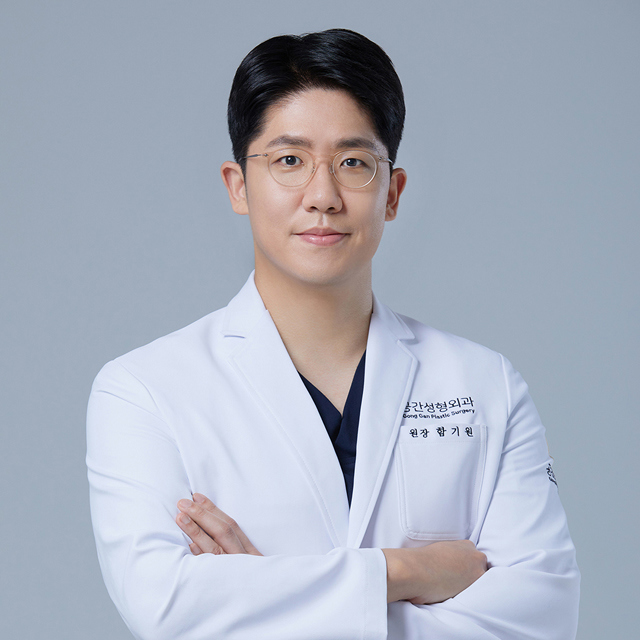
Dr. Kiweon Ham Plastic Surgery Specialist, M.D.
Gong Gan Plastic Surgery is led by Representative Director Dr. Kiweon Ham , a board-certified plastic surgeon with 17 years of clinical experience and a comprehensive training background spanning Korea's most prestigious medical institutions and leading international surgical centers.
Dr. Ham completed his medical degree at Yonsei University College of Medicine and his plastic surgery residency at Severance Hospital . He undertook advanced fellowships at the University of California San Diego Medical Center (UCSD) and the University of Pittsburgh Medical Center (UPMC) before returning to Severance as a Former Clinical Instructor. Gong Gan operates as an official partner clinic of Yonsei University Severance Hospital .
He holds Life Membership and serves on the Academic Committee of KSPRS , presenting regularly at international conferences, and is a full member of KSAPS , KCPCA , and IPRAS .
Mini facelift requires the same depth of anatomical knowledge and surgical precision as a full facelift — because the SMAS layer and retaining ligaments must be addressed at the same structural level regardless of the incision scope. The difference is in how precisely the correction is targeted and how appropriately it is calibrated to the individual patient's degree of sagging. Dr. Ham's three-dimensional diagnostic approach ensures every mini facelift is neither under-planned nor over-planned for the patient's actual facial condition.
[Book a Consultation with Dr. Kiweon Ham]
Mini Facelift: SMAS-Level Correction and Retaining Ligament Release at Gong Gan
Why SMAS-Level Correction Matters
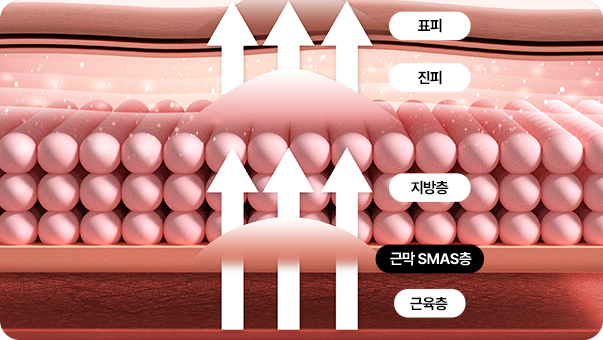
The SMAS — superficial musculoaponeurotic system — is a thin fibromuscular layer located between the subcutaneous fat and the deeper facial muscles. It is the structural layer that, when lifted and repositioned, produces a meaningful and lasting facelift result. Lifting only the skin above the SMAS produces a tighter but temporary improvement that does not address the actual descended tissue and tends to create an unnatural, pulled appearance. At Gong Gan, mini facelift always reaches the SMAS layer — releasing, lifting, and repositioning it to restore the facial contour from within. Because the facial nerve, blood vessels, and muscles all pass through and around the SMAS region, working at this level requires extensive clinical experience and precise anatomical knowledge. Dr. Ham brings both to every mini facelift procedure.
Why Retaining Ligament Release Is Essential
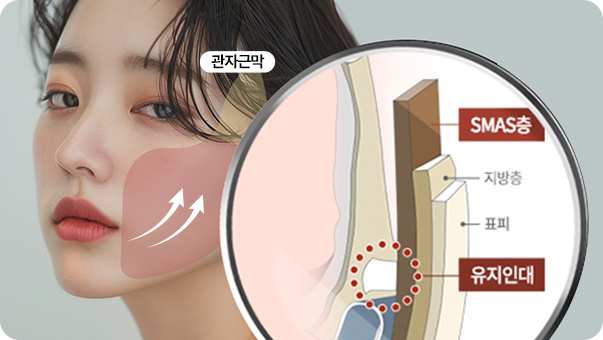
The retaining ligaments are fibrous structures that anchor the facial skin and soft tissue to the underlying bone and deeper structures. They play an important role in keeping the face in its natural youthful position — but as they weaken and elongate with age, they allow the facial tissue to descend. When a facelift or mini lift is performed without releasing these ligaments, the upward lifting movement is impeded by the anchoring force of the ligaments still in place, limiting how effectively the tissue can be repositioned. At Gong Gan, retaining ligament release is incorporated into the mini facelift procedure to remove this structural obstacle and allow the lifted tissue to be repositioned fully and naturally into its corrected position.
Mini Facelift vs. Full Facelift — Choosing the Right Scope
Mini facelift incisions run along the inside of the hairline and the natural crease in front of the ear — a limited but strategically placed access path that allows effective mid-face and lower face correction. This scope is well-suited to patients whose primary concern is mid-face and cheek sagging. Full facelift incisions extend from the temple around the back of the ear, providing broader access for comprehensive full-facial correction of deeper or more widespread aging. The appropriate approach is determined by individual diagnosis — not by preference alone — ensuring the correction matches the actual degree and distribution of the patient's facial sagging.
Treatment Areas
Mini facelift at Gong Gan addresses four primary zones of concern:
- Nasolabial Folds: SMAS-level lifting reduces the depth of nasolabial folds through structural tissue repositioning
- Cheek Sagging: Mid-face SMAS dissection restores descended cheek volume and contour
- Mouth Corners: Targeted lifting improves downturned or drooping mouth corners for a more relaxed, approachable impression
- Eye Area Wrinkles: Lateral tissue lifting addresses wrinkle accumulation around the outer eye area
Individual results vary depending on skin elasticity, degree of sagging, SMAS condition, and healing response. Realistic expectations are discussed in full during pre-operative consultation.
The Mini Facelift Process at Gong Gan Plastic Surgery
- Three-Dimensional Individual Diagnosis: Dr. Ham evaluates the patient's facial sagging in detail — SMAS condition, retaining ligament laxity, skin elasticity, wrinkle depth and distribution, and the specific zones of primary concern. This multi-dimensional assessment determines the appropriate incision scope, the degree of SMAS correction needed, and whether complementary procedures would enhance the result.
- Incision Planning: The incision line — inside the hairline, along the sideburn, and in front of the ear — is planned precisely based on the individual's concern zones and anatomy. Incision position and scope are adjusted to the individual rather than applied uniformly.
- SMAS Dissection, Retaining Ligament Release, and Lifting: The SMAS layer is accessed through the planned incisions, dissected, and lifted upward to reposition the descended mid-face and lower face tissue. Retaining ligaments are released to allow full and natural tissue repositioning. The lifted SMAS is fixed in its corrected position for a structurally stable result.
- Skin Closure and Scar Concealment: Excess skin is trimmed as needed following SMAS lifting and the incision is closed with precise suturing along the natural hairline and pre-auricular crease, ensuring scars remain well-concealed after healing.
- Recovery and Follow-Up: Swelling and bruising following mini facelift typically resolve within one to two weeks. Two to three follow-up visits are scheduled. Dr. Ham personally oversees all follow-up appointments to monitor lifting effect, scar healing, and the development of the final rejuvenated result.
Results, Safety, and Longevity
Mini facelift at Gong Gan produces structurally grounded, naturally maintained facial lifting through SMAS-level correction and retaining ligament release. By addressing the deep structural cause of sagging rather than the surface skin alone, the result is more durable and more natural-looking than skin-only or thread-based approaches. The limited incision scope reduces the overall surgical burden while still delivering meaningful, lasting improvement for patients whose sagging is partial or moderate.
All procedures are supported by hospital-grade safety systems : OR CCTV monitoring confirming Dr. Ham performs every surgery personally, and multi-stage sterilization protocols exceeding standard medical guidelines. SMAS dissection is performed with the care and precision that this anatomically complex region demands — the facial nerve and blood vessels are carefully protected throughout.
As with any surgical procedure, mini facelift carries risks including temporary swelling, bruising, and a low infection risk. Serious complications are rare but possible and discussed openly during pre-operative consultation.
Why Choose Gong Gan Plastic Surgery for Mini Facelift?
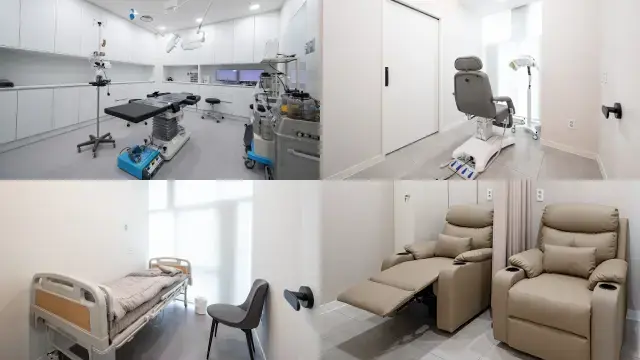
As an official partner clinic of Yonsei University Severance Hospital , Gong Gan combines university-hospital-level anatomical precision with a dedicated boutique practice model — well-suited to the individually calibrated demands of mini facelift surgery. Dr. Ham's 17 years of experience , UCSD and UPMC fellowships , and KSPRS academic engagement bring both clinical depth and current surgical knowledge to every partial facelift case.
His three-dimensional diagnostic approach — assessing SMAS condition, retaining ligament laxity, skin elasticity, and sagging distribution individually — ensures that every mini facelift is precisely matched to the patient's actual facial condition, not applied as a standardized procedure. His all-in-one care model ensures complete continuity from assessment to final follow-up.
- SMAS-Level Precision: Mini facelift reaches the deep structural layer that produces meaningful, lasting results — not a surface skin-only correction
- Retaining Ligament Release: Structural anchors released to allow full, natural tissue repositioning and a more complete lifting effect
- Full Surgical Transparency: OR CCTV monitoring confirms every procedure is performed exclusively by Dr. Ham
Patient Experiences
Mini Facelift Patient, 50s
This patient had noticed progressive mid-face sagging and deepening nasolabial folds but felt a full facelift was more than she needed at her current stage. Following three-dimensional diagnosis, Dr. Ham performed a mini facelift with SMAS correction and retaining ligament release targeting the mid-face and cheek zones. At follow-up she noted a naturally lifted, refreshed mid-face appearance — the nasolabial fold depth was meaningfully reduced and her cheek contour restored without any tightened or overdone impression.
Mini Lift Patient, 40s
A patient in his mid-40s sought mini facelift for early mid-face descent and mouth corner drooping that were beginning to affect his appearance. Dr. Ham performed targeted SMAS-level mini lifting with retaining ligament release. The patient reported a comfortable recovery and noted a naturally refreshed facial impression at follow-up — a more rested and balanced appearance that looked entirely consistent with his own face.
Ready to Lift Partial Facial Sagging With Precision? Book Your Mini Facelift Consultation.
If partial facial sagging, deepening nasolabial folds, or descended cheek contour are affecting your appearance and you want a surgical solution calibrated to your individual degree of concern, mini facelift at Gong Gan Plastic Surgery offers a precisely diagnosed, SMAS-level correction with a reduced surgical footprint. Dr. Kiweon Ham combines 17 years of clinical expertise , Severance Hospital training , UCSD and UPMC fellowships , and KSPRS Academic Committee membership to deliver mini facelift surgery grounded in structural precision, three-dimensional diagnosis, and genuine patient understanding. Every stage is managed directly by Dr. Ham.
[Book Your Mini Facelift Consultation at Gong Gan Plastic Surgery]
For direct inquiries, contact the Gong Gan Plastic Surgery appointment desk to speak with the medical coordination team about your mini facelift goals and eligibility.
Other Services
Explore additional treatments offered by our specialists.

Men's Monolid Ptosis Correction
Men's monolid ptosis correction is a surgical procedure that addresses weak eyelid-opening muscle strength to create a more alert, defined, and naturally open eye appearance.
Learn More

Brow Ptosis Correction
Brow ptosis correction is a procedure that addresses drooping upper eyelid skin by making an incision directly below the eyebrow, removing the excess sagging tissue, and lifting the eyelid upward.
Learn More

Men's Rhinoplasty
Men's rhinoplasty is a specialized approach to nose surgery that accounts for the fundamental differences between male and female facial anatomy, skin characteristics, and aesthetic ideals.
Learn More