17+ Years of Personalized Eye, Nose & Lifting Plastic Surgery in Gangnam, Seoul


Eye Surgery
Epicanthoplasty
Epicanthoplasty and canthoplasty are surgical procedures that modify the corners of the eye — the inner corner, outer corner, or both.
Schedule a ConsultationWhat Is Epicanthoplasty and How Does Eye Corner Surgery Improve Appearance?

Epicanthoplasty and canthoplasty are surgical procedures that modify the corners of the eye — the inner corner, outer corner, or both — to improve the horizontal and vertical dimensions of the eye, correct disproportionate angles, and create a more open, balanced, and harmonious eye appearance. For patients whose eyes appear short, constricted, narrow, or have an undesirably sharp outer angle, eye corner surgery offers a precise and lasting structural correction.
At Gonggan Plastic Surgery, eye corner procedures are always planned in the context of the patient's full facial proportions. The goal is not simply to make the eye larger in isolation — it is to adjust the eye's dimensions and angles so they integrate naturally with the surrounding features, creating an impression that looks refreshed and proportionate rather than surgically altered. Dr. Ki Weon Ham evaluates each patient's eye shape, corner anatomy, and facial balance individually before recommending any combination of procedures, ensuring the correction is precisely matched to what each patient's eyes actually need.
Who Is a Candidate for Epicanthoplasty or Canthoplasty?
Eye corner surgery is suitable for patients who are bothered by the length, shape, or angular impression of their eyes and wish to achieve a more open, balanced, or softened appearance. Candidacy is confirmed through detailed clinical evaluation.
Ideal candidates include:
- Individuals in their late teens to 40s with a prominent epicanthal fold covering the inner corner, making the eyes appear closer together or shorter
- Those whose eyes appear narrow or short horizontally and wish to extend the visible length of the eye
- Patients with an upward-tilting or sharp outer eye corner that creates a severe or intense facial impression
- Those who wish to soften the outer corner angle to create a gentler, more approachable appearance
- Individuals seeking to increase the vertical dimension of the eye for a more open and expressive look
- Patients who want eye corner correction as a standalone procedure or combined with double eyelid surgery for a comprehensive improvement
- Those who want natural-looking results with minimal visible scarring at the correction sites
- Patients in good general health with realistic expectations about the achievable range of eye widening and angle correction
Meet Dr. Ki Weon Ham — Epicanthoplasty and Eye Corner Surgery Specialist

Dr. Ki Weon Ham Plastic Surgery
Specialist, M.D.
Gonggan Plastic Surgery is led by Representative Director Dr. Ki Weon Ham, a board-certified plastic surgeon with 17 years of clinical experience and a comprehensive training background spanning Korea's most prestigious institutions and leading international surgical centers.
Dr. Ham completed his medical degree at Yonsei University College of Medicine and his plastic surgery residency at Severance Hospital. He undertook advanced fellowships at the University of California San Diego Medical Center (UCSD) and the University of Pittsburgh Medical Center (UPMC) before returning to Severance as a Former Clinical Instructor. Gonggan operates as an official partner clinic of Yonsei University Severance Hospital.
He holds Life Membership and serves on the Academic Committee of the Korean Society of Plastic and Reconstructive Surgeons (KSPRS), presenting regularly at international KSPRS conferences. He is also a full member of KSAPS, KCPCA, and IPRAS.
For eye corner surgery, Dr. Ham's approach prioritizes two things above all: natural scar concealment and structural longevity. Visible scarring at the inner or outer corner can undermine an otherwise successful correction — so every incision is placed within the natural hidden spaces of the eyelid anatomy. And a result that gradually reverses over time is not a lasting solution — so fixation to the periosteum and CPF is used where indicated to ensure durability.
[Book a Consultation with Dr. Ki Weon Ham]
Eye Corner Surgery Procedures at Gonggan Plastic Surgery
- Medial Epicanthoplasty — Inner Corner Release Toward the Nose: The epicanthal fold — a skin band that covers the inner corner of the eye — is a common anatomical feature that can make the eye appear shorter and the inner corners appear more closed or crowded. Medial epicanthoplasty releases this fold by opening the inner corner in the direction of the nose, visibly extending the horizontal length of the eye and creating a fresher, more open starting point for the eyelid. At Gonggan, the incision is made within the hidden space beneath the overlying skin — a technique that conceals the resulting scar naturally within the anatomy of the inner corner, making it virtually invisible after healing.
- Upper Epicanthoplasty — Inner Corner Release at 45 Degrees Upward: Upper epicanthoplasty addresses the same epicanthal fold as the medial approach but releases the inner corner in a 45-degree upward direction rather than toward the nose. The movement of the skin flap in this direction creates a fresher, more open eye starting point with a slightly different angular character. This procedure suits patients whose inner corner anatomy benefits from an upward rather than a lateral release, and is selected based on the specific structural characteristics of the individual's epicanthal fold and the desired directional change.
- Lateral Canthoplasty — Outer Corner Lowering and Horizontal Eye Widening: For patients whose outer eye corner tilts upward, creating a sharp, severe, or intense facial impression, lateral canthoplasty lowers the outer corner angle while simultaneously widening the horizontal length of the eye. At Gonggan, the outer canthus is carefully preserved during the procedure and then firmly fixed to the periosteum — the fibrous layer overlying the bone — providing a stable structural anchor that significantly reduces the risk of recurrence and maintains the corrected angle over the long term. This fixation technique is central to the durability of the lateral canthoplasty result.
- Lower Canthoplasty — Vertical Eye Widening and Impression Softening: Lower canthoplasty adjusts the angle of the outer lower eyelid corner to increase the vertical dimension of the eye, creating a softer and more open appearance. The lower eyelid plate is fixed to the periosteum to achieve a sufficient and lasting effect. Gonggan's approach additionally fixes the correction to the CPF — the capsulopalpebral fascia — after individually adjusting the angle to match each patient's specific anatomy. This dual fixation approach enhances the longevity of the result and reduces the risk of the correction gradually reversing over time.
Individual results vary depending on eye anatomy, skin characteristics, and healing response. The appropriate procedure or combination is recommended following thorough individual assessment. Realistic expectations are discussed in full during pre-operative consultation.
The Eye Corner Surgery Process at Gonggan Plastic Surgery
- Individual Eye Assessment: Dr. Ham evaluates the patient's eye corner anatomy in detail — epicanthal fold prominence, inner corner angle, outer corner tilt, horizontal and vertical eye dimensions, and overall facial proportional balance. The specific concern driving the patient's dissatisfaction is identified precisely before any procedure is recommended.
- Procedure Selection and Goal-Setting Consultation: The appropriate procedure or combination — medial epicanthoplasty, upper epicanthoplasty, lateral canthoplasty, lower canthoplasty, or a combination — is discussed based on the individual findings. The achievable range of improvement and realistic expectations are communicated clearly and honestly.
- Personalized Surgical Plan: A fully individualized surgical plan is developed. Only the procedures that are genuinely indicated for the patient's specific anatomy and goals are included — no additional surgery is recommended without clear justification.
- Eye Corner Surgery Procedure: Dr. Ham performs the surgery directly, with meticulous attention to incision placement, scar concealment, and structural fixation. Inner corner incisions are placed within the natural hidden anatomy to minimize visible scarring. Outer and lower corner corrections are anchored to the periosteum and CPF as indicated, ensuring structural durability.
- Post-Operative Care and Recovery: Mild swelling and bruising around the eye corners are expected and typically resolve within one to two weeks. A dedicated post-operative management program is provided with specialist care coordination throughout the recovery period.
- Follow-Up and Outcome Monitoring: Dr. Ham personally oversees all follow-up appointments. Eye corner shape and proportions become progressively clearer as swelling resolves, with final results continuing to stabilize over the following weeks.
Results, Safety, and Longevity
 |
 |
 |
 |
|---|
Eye corner surgery at Gonggan is designed for stable, naturally maintained outcomes. The use of periosteal and CPF fixation in lateral and lower canthoplasty procedures provides a structural anchor that resists gradual reversal — a key differentiator from techniques that rely on sutures alone. Inner corner procedures are designed with scar concealment as a primary concern, ensuring that the correction is visible in the improved eye shape rather than in any residual incision mark.
All procedures are supported by hospital-grade safety systems: operating room CCTV monitoring confirming that Dr. Ham performs every surgery personally, and multi-stage sterilization protocols exceeding standard medical guidelines. Only genuinely necessary procedures are recommended — the no-unnecessary-surgery principle applies as consistently to eye corner surgery as to every other procedure at Gonggan.
As with any surgical procedure, epicanthoplasty and canthoplasty carry inherent risks including temporary swelling, bruising, asymmetry during healing, and a low risk of infection. Serious complications are rare but possible and are discussed openly during pre-operative consultation.
Why Choose Gonggan Plastic Surgery for Epicanthoplasty?
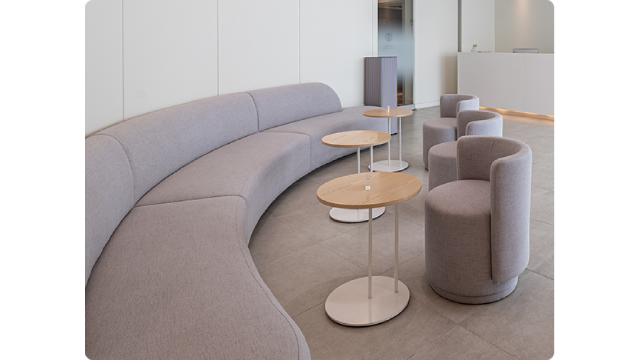
As an official partner clinic of Yonsei University Severance Hospital, Gonggan delivers university-hospital-level precision within a dedicated single-surgeon boutique practice — well-suited to the detail-sensitive demands of eye corner surgery, where incision placement, fixation technique, and proportional design all determine the quality and longevity of the outcome.
Dr. Ham's 17 years of experience, UCSD and UPMC fellowships, and ongoing KSPRS academic engagement bring clinical depth and research awareness to every eye corner case. His all-in-one care model ensures he personally manages every stage with no rotating surgeons and no gaps in continuity.
- Scar Concealment Expertise: Inner corner incisions placed within the natural hidden anatomy of the eyelid — minimizing visible scarring while maximizing the visible improvement in eye shape
- Structural Fixation for Longevity: Periosteal and CPF fixation techniques used in lateral and lower canthoplasty to provide a durable structural anchor and reduce recurrence risk
- Full Surgical Transparency: OR CCTV monitoring confirms every procedure is performed exclusively by Dr. Ham
Patient Experiences: Epicanthoplasty at Gonggan Plastic Surgery

Medial Epicanthoplasty Patient, 20s
This patient was bothered by a prominent epicanthal fold that made her eyes appear short and her inner corners look crowded. Following assessment, Dr. Ham performed medial epicanthoplasty using Gonggan's hidden-space incision technique. At follow-up, she noted a visibly longer, more open eye with no detectable scarring at the inner corner — exactly the natural improvement she had hoped for.
Lateral Canthoplasty Patient, 30s
A patient with an upward-tilting outer corner that created a sharp, intense facial impression underwent lateral canthoplasty with periosteal fixation at Gonggan. Dr. Ham lowered the outer corner angle and anchored it firmly to the periosteum. The patient reported a noticeably softer and more approachable eye appearance at follow-up, with the corrected angle remaining stable at subsequent check-ups.
Ready for More Open, Proportionate Eyes? Book Your Eye Corner Consultation.
If the length, shape, or angular impression of your eyes is affecting your confidence and facial balance, epicanthoplasty and canthoplasty at Gonggan Plastic Surgery offer a precisely planned, individually designed solution. Dr. Ki Weon Ham combines 17 years of clinical expertise, Severance Hospital training, UCSD and UPMC fellowships, and KSPRS Academic Committee membership to deliver eye corner surgery built on structural precision, natural scar concealment, and durable fixation. Every stage is managed directly by Dr. Ham — ensuring your goals are heard, accurately assessed, and executed with the detail your eyes deserve.
[Book Your Epicanthoplasty Consultation at Gonggan Plastic Surgery]
Other Services
Explore additional treatments offered by our specialists.

Facelift
A facelift — is a surgical procedure that addresses deep wrinkles, comprehensive skin sagging, and the structural descent of facial tissue by lifting and repositioning the facial soft tissue at the deep structural level.
Learn More

Alar Reduction
Alar base reduction — is a surgical procedure that narrows the width of the nostrils and alar base to create a more refined and proportionate nasal appearance.
Learn More

Double Eyelid Surgery
Double eyelid surgery — also known as blepharoplasty or eyelid crease surgery — creates or refines a fold in the upper eyelid to produce a more defined, open, and balanced eye appearance.
Learn More